Subfloor Ventilation in Mortlake
Subfloor ventilation for Mortlake's cottages on low ground by the river.
Subfloor ventilation in Mortlake homes
Mortlake’s interwar cottages, Federation homes and weatherboards sit on timber floors over low ground beside the Parramatta River, near the Putney punt. Many were built for workers at the old gasworks, with basic subfloors and only a few vents. On the streets nearest the water, the soil stays damp much of the year.
What we find under Mortlake homes
- Low subfloors over damp ground
- Weatherboard cottages with enclosed brick bases
- Few vents, many blocked
- Mould and decay on timbers
- Musty smells after wet weather
How we ventilate Mortlake subfloors
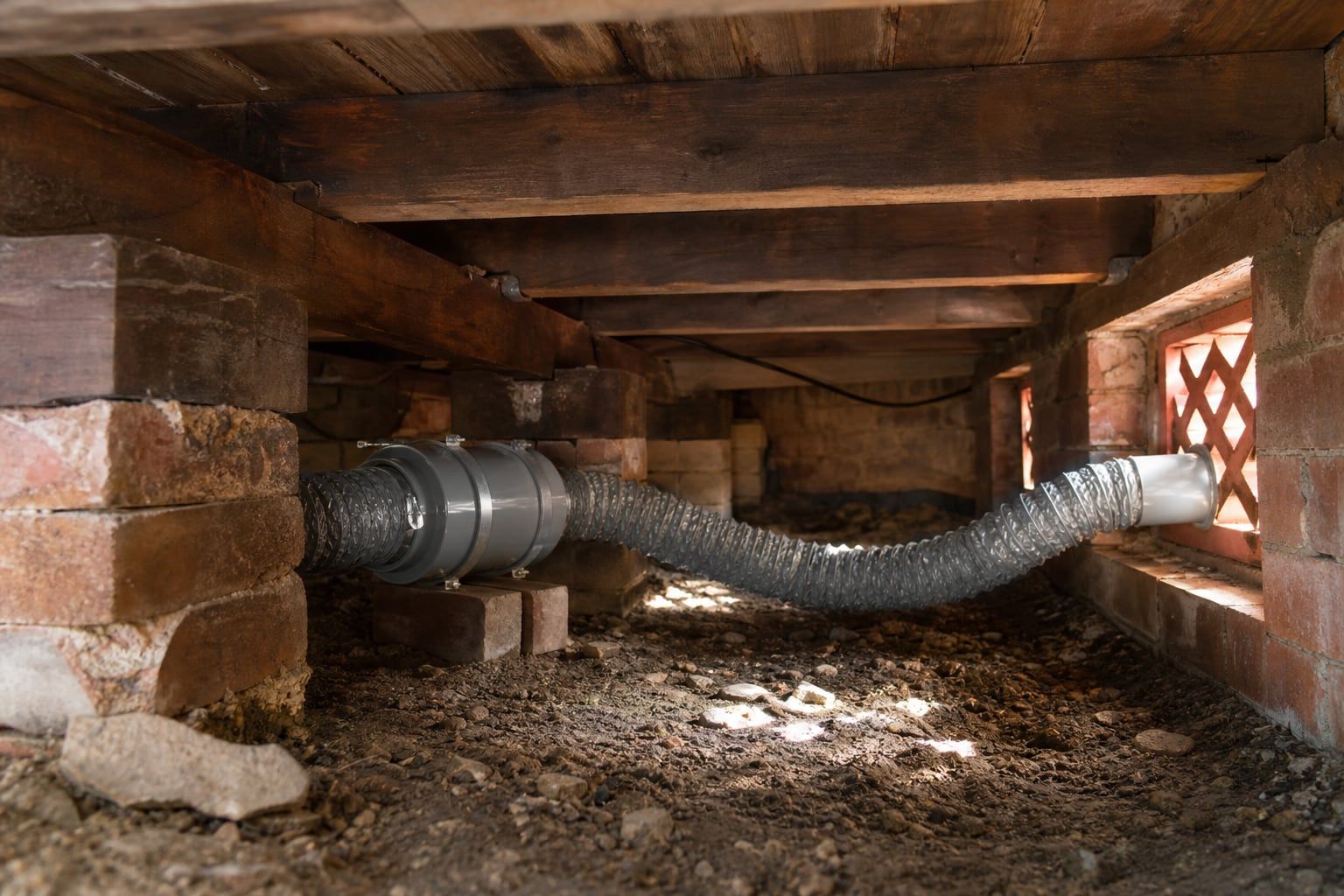
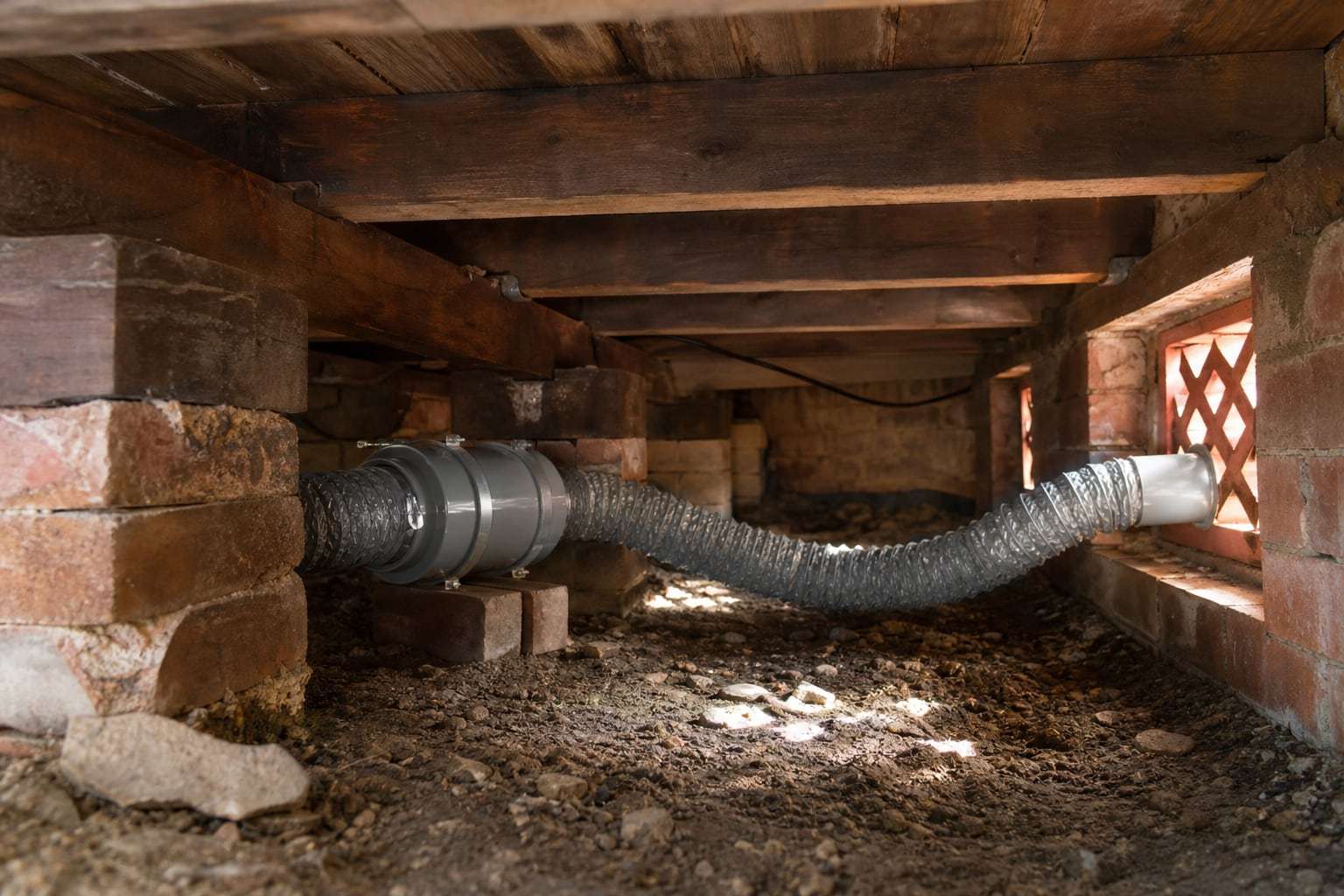
We measure moisture and look at drainage. Where water gets under the house, we fix it first. Then we add vents for cross-flow or an inline fan with ducting to enclosed sections, exhausting outside. A licensed electrician connects any fan, and it can run on a timer or humidity control.
Ventilation and damp walls
Damp walls are a separate job, explained on our page on rising damp in Mortlake. Our subfloor ventilation page has more on the systems.
Book an inspection
Book a free look under your Mortlake home. You’ll get photos of what we find and a quote that won’t change.
More rising damp services in Mortlake
Why Mortlake homeowners call us
15+ years on Inner West damp
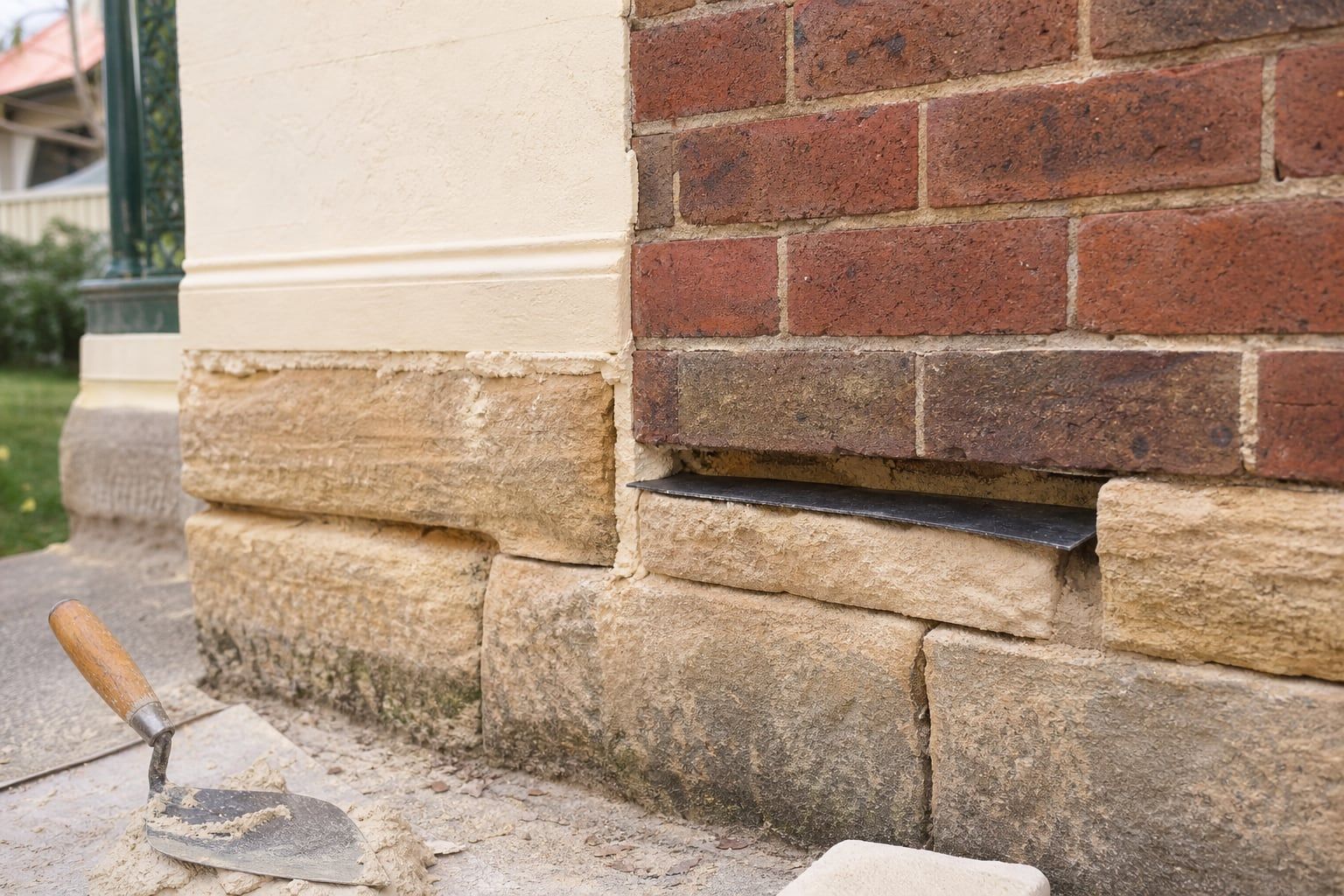
Solid brick, sandstone footings and lime mortar are what we have worked on for more than 15 years, so the treatment is chosen for the wall, not the other way round.
Cause first
We measure moisture and check drainage, ground levels, leaks and ventilation before recommending a damp course, so you only pay for what fixes the problem.
Fixed-price quotes
You get a written, fixed-price quote after the inspection, with no obligation to go ahead.
How a Mortlake job runs
- We inspect and measureWe confirm it's genuinely rising damp, not a leak, and measure how far it has climbed.
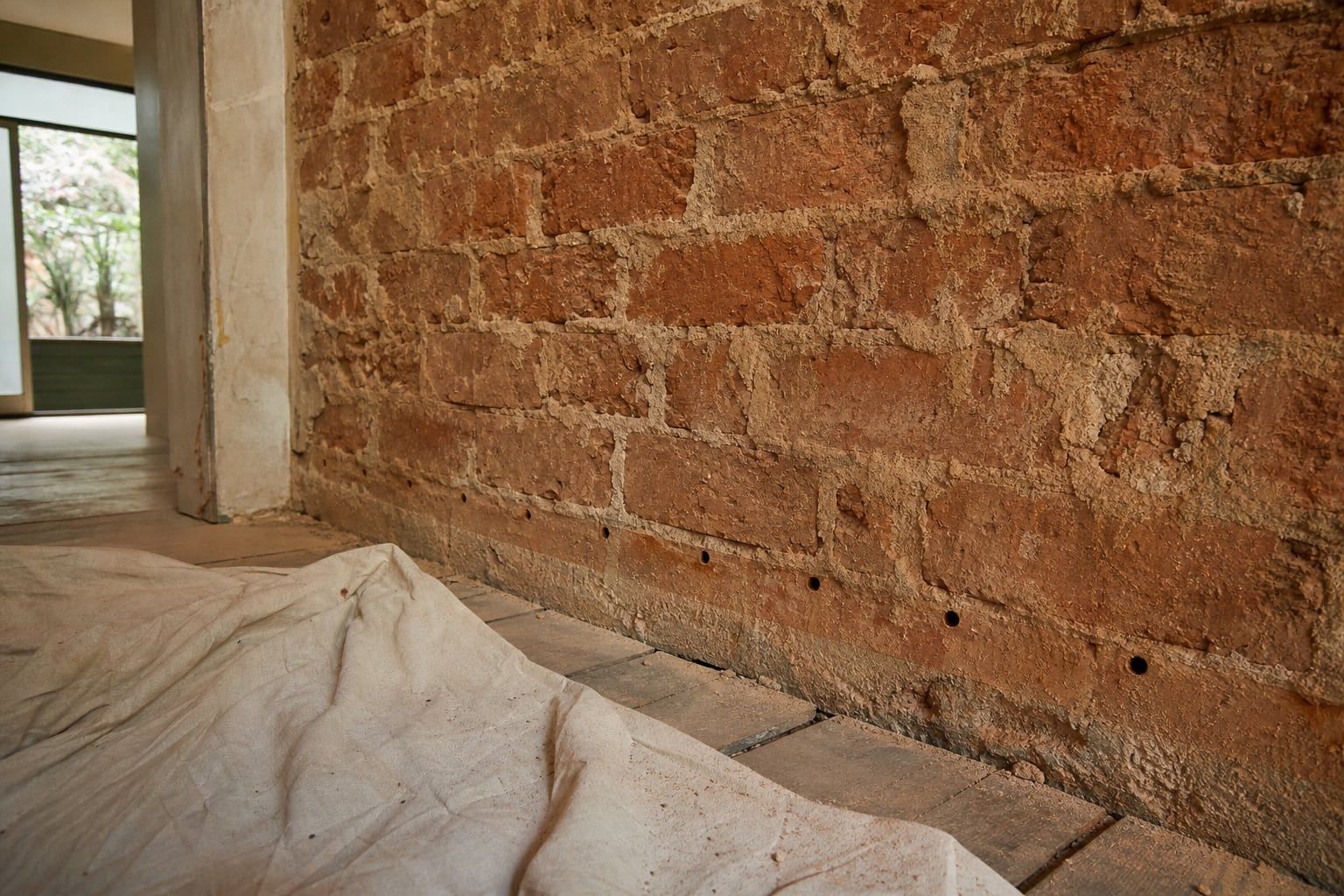
- Install the damp courseWe inject or insert a new damp-proof barrier along the affected walls.
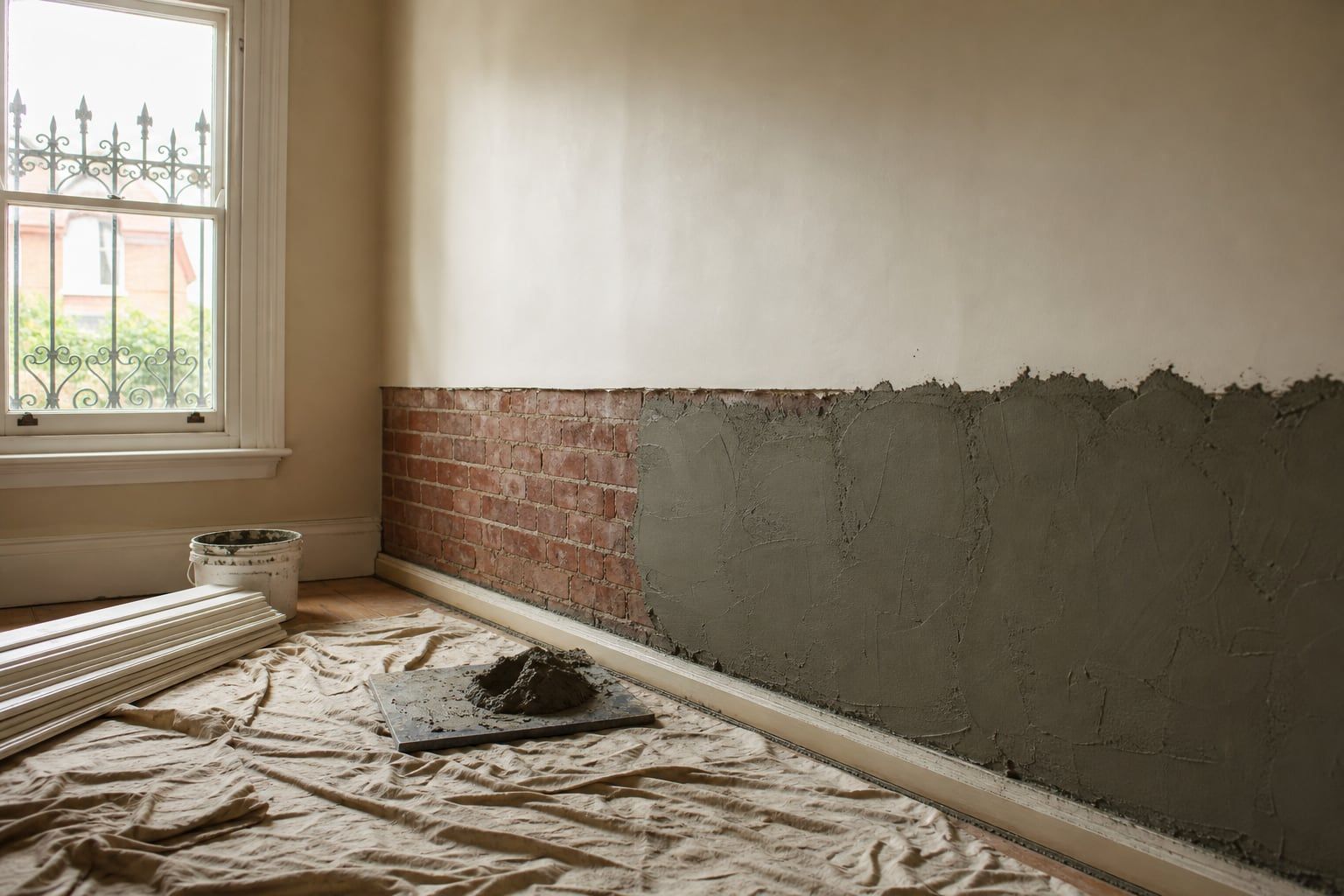
- Repair the plasterWe hack off salt-damaged render and replaster with a salt-resistant system.
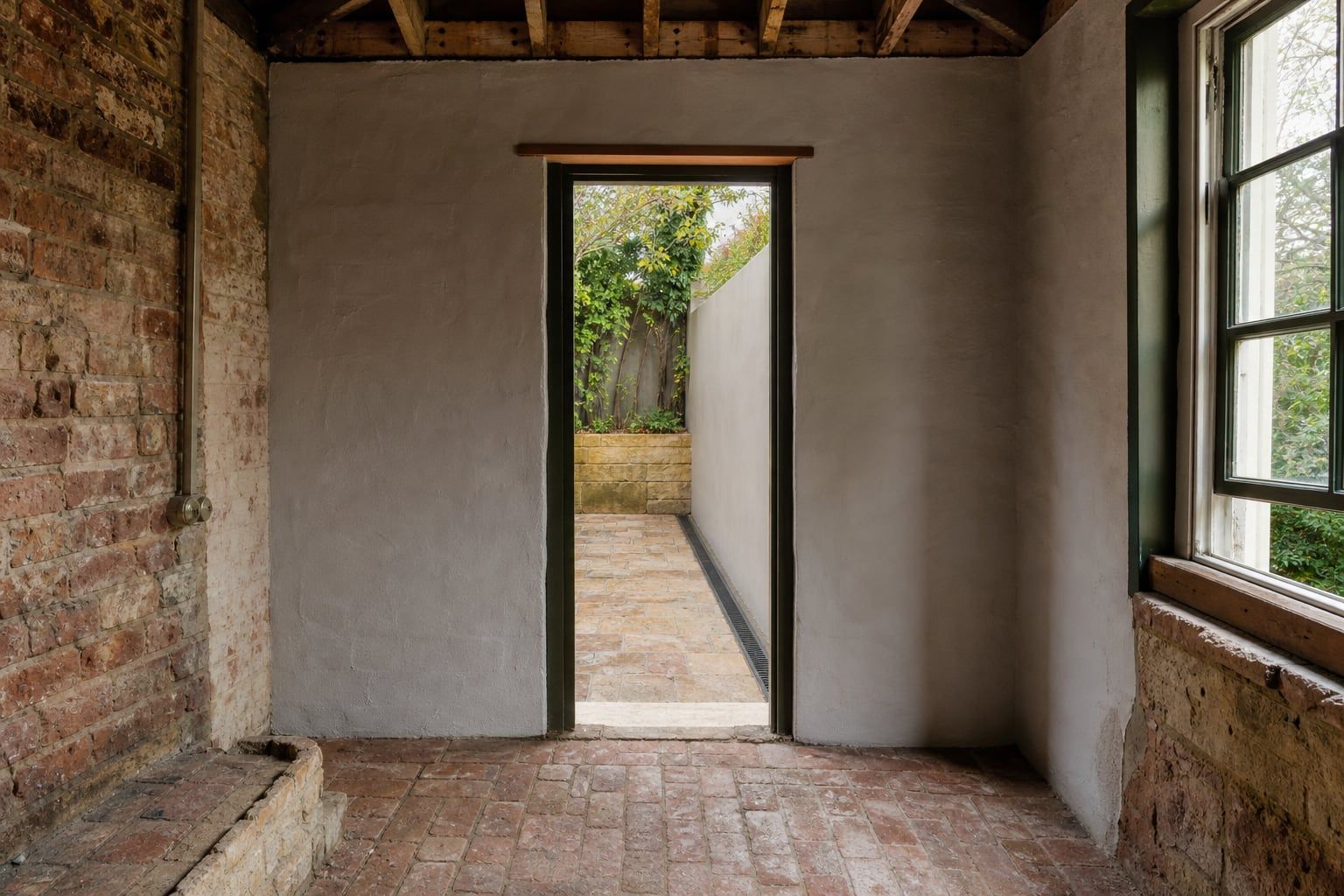
- Dry out and checkThe wall dries over the following weeks, and we check back that it's holding.
Rising damp guides for Mortlake homeowners
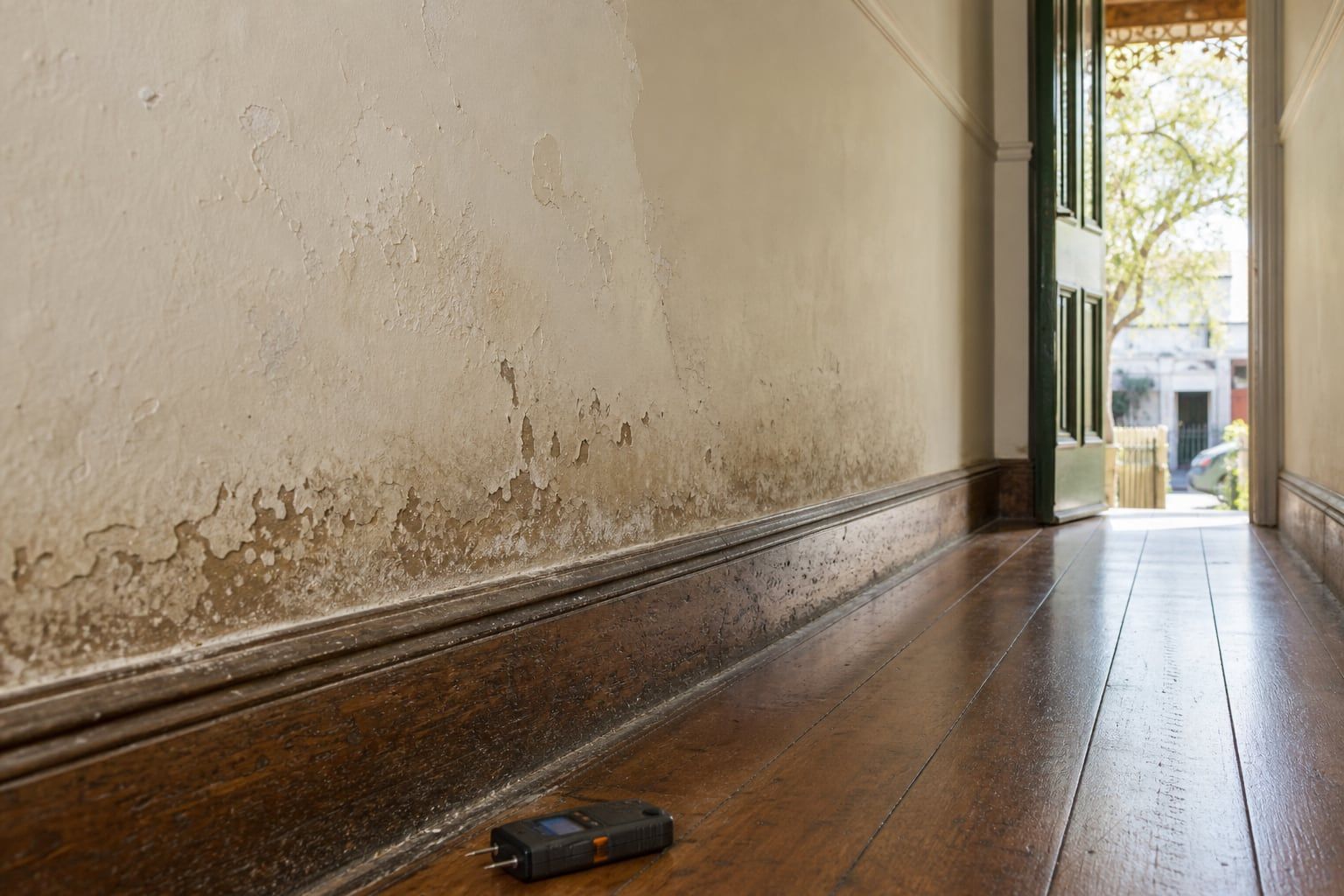
- Tide marks on walls: what a rising damp tide mark meansWhy a brown or white line forms along the bottom of damp walls, how to tell rising damp from other causes, and what fixes it.
- Bubbling paint and blown plaster: is it rising damp?Why paint blisters and plaster crumbles near the floor of older homes, how to find the cause, and how to repair it so it stays fixed.
- Damp, musty smell in the house: finding the sourceWhere the musty smell in older homes comes from, the subfloor and wall problems behind it, and how to get rid of it for good.
- Mould low on walls and skirtings: condensation, rising damp or a leak?How to tell what is causing mould on your walls, why cleaning it off doesn't stop it, and how each cause is fixed.
- White salt deposits on walls: rising damp salt efflorescence explainedWhat the white crystals on damp walls are, why they keep coming back, and how salt-damaged walls are repaired.
Subfloor Ventilation questions in Mortlake
Something else on your mind? Call 02 9158 9921 and ask.
Our Mortlake cottage is weatherboard. Can the subfloor still be damp?
Yes. Weatherboard cottages on brick piers often have partly enclosed subfloors that trap damp air from the ground. Ventilation and drainage help.
Will drying the subfloor help with termites?
A dry subfloor is less attractive to termites, though regular termite inspections are still worthwhile.