Rising Damp in Forest Lodge
Damp courses and salt-resistant replastering for Forest Lodge's narrow Victorian terraces.
Rising damp in Forest Lodge homes
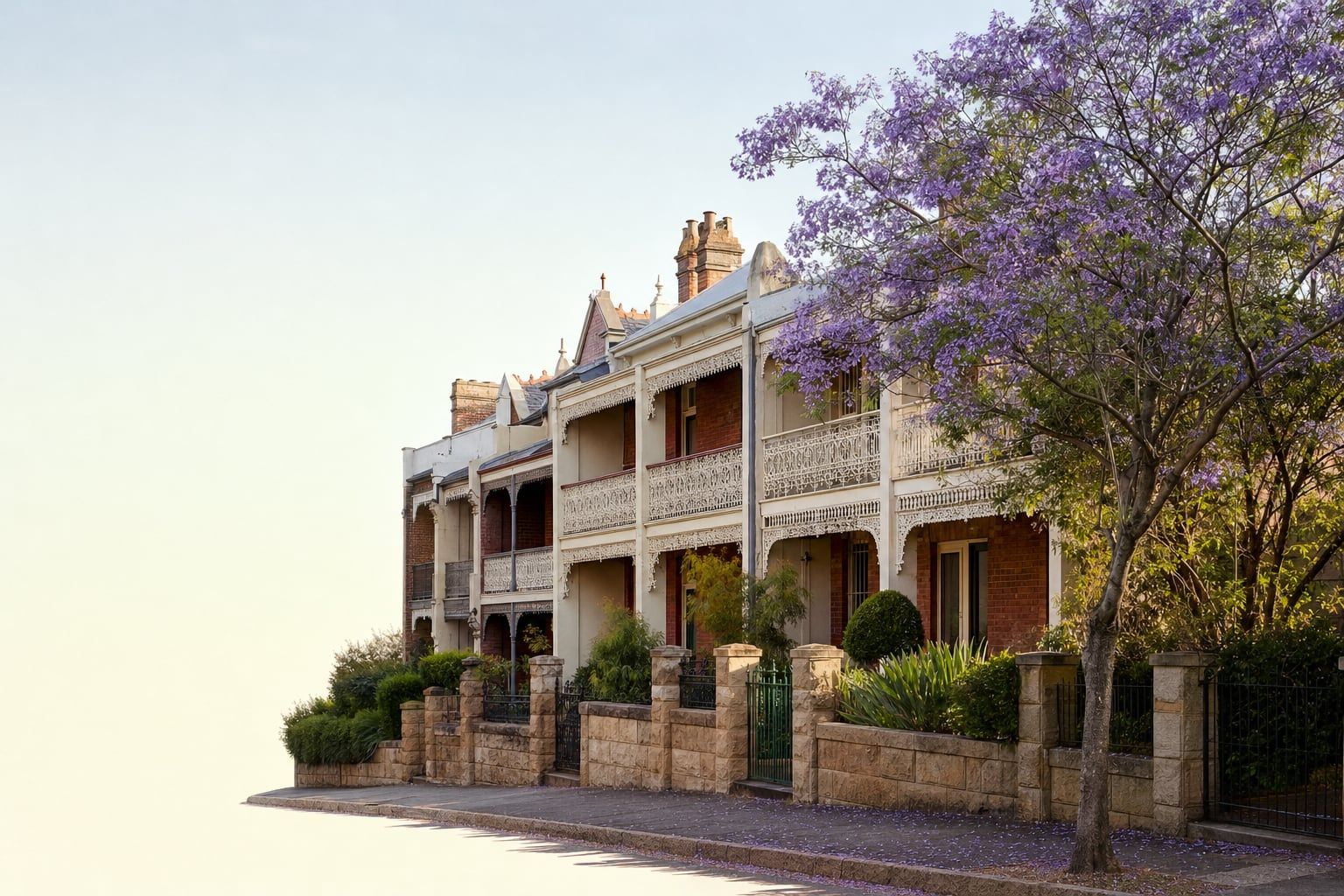
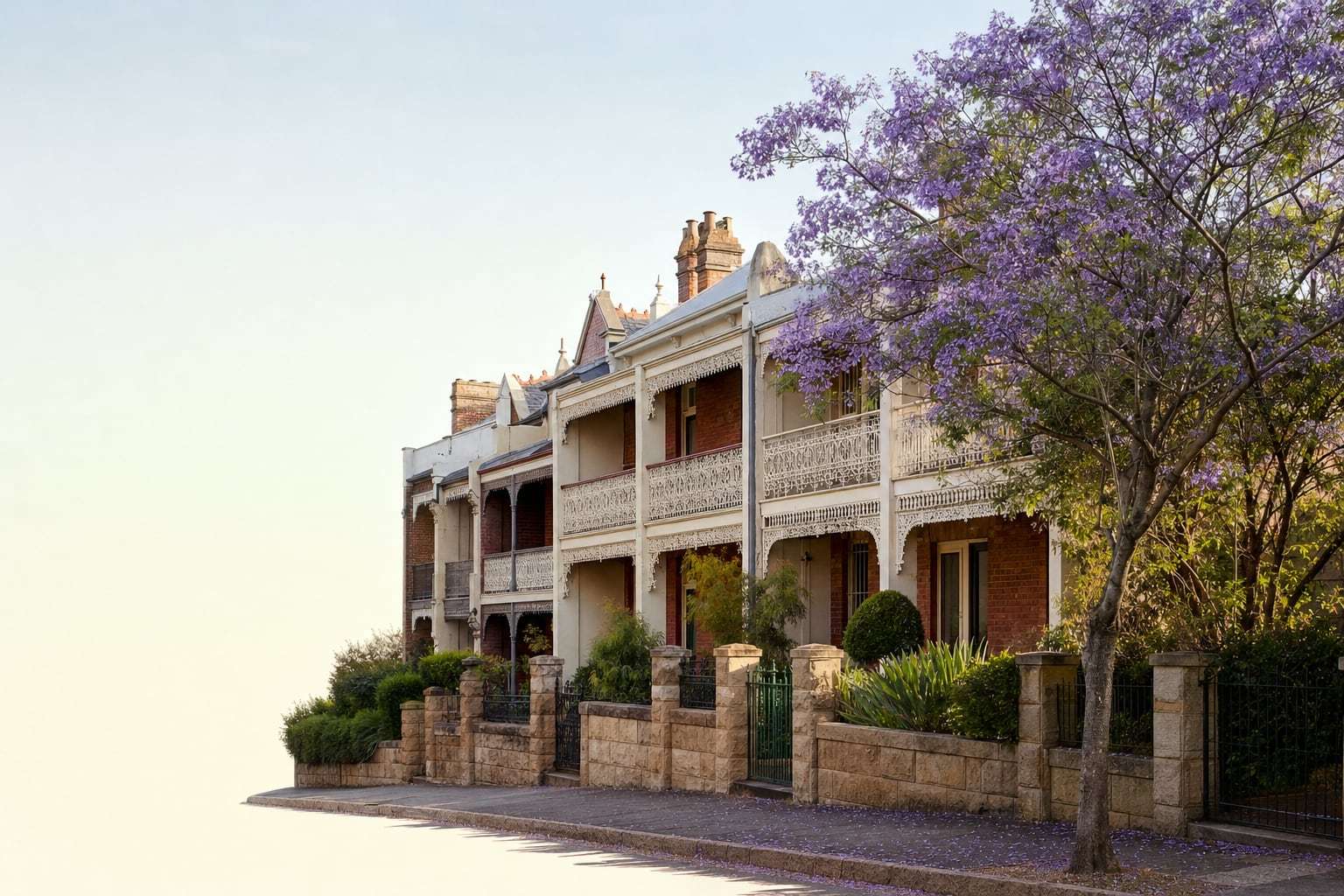
Forest Lodge is one of the smallest suburbs in the Inner West, tucked between Glebe, Annandale and the University of Sydney. It’s almost entirely Victorian: narrow streets of single and two-storey terraces, many with iron lace balconies and tiny front gardens, built in the 1870s to 1890s. A few larger villas and old corner shops are mixed in, and the whole area has a strong heritage character.
Those terraces were built in solid brick on shallow footings, often straight onto sandstone, with slate damp courses or none at all. Well over a century later, most of those barriers have failed, and rising damp is one of the most common problems Forest Lodge owners face.
Streets and ground
Forest Lodge sits on the slope that falls from Parramatta Road and the university down to Johnstons Creek and Wentworth Park. The lower streets near the creek were once swampy ground, and the soil there still holds water. Houses at the bottom of the slope, and the back walls of terraces set into it, tend to have the highest moisture readings.
With houses packed tightly and courtyards often fully paved, rainwater has very little room to soak away. It pools against back walls and runs along side passages, adding to the damp in the brick.
What we usually find in Forest Lodge
- Failed slate damp courses cracked as terraces have settled
- Party walls drawing damp up through the full length of the house
- Back walls set into the slope, wet from the side after rain
- Fully paved courtyards sitting above the damp course line
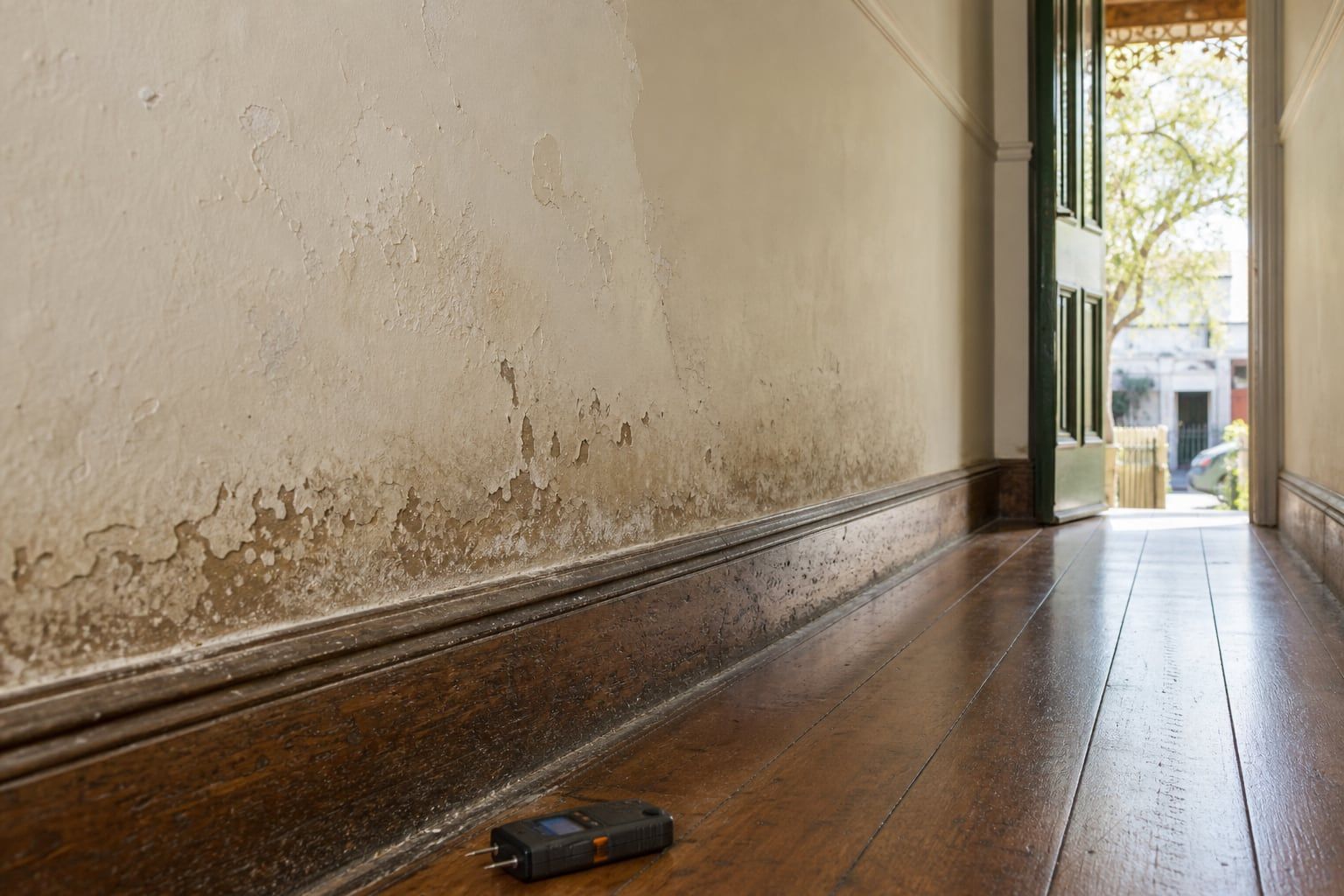
- Salt and flaking paint in hallways and front rooms
- Low, closed-in subfloors with little or no airflow
How we treat Forest Lodge homes
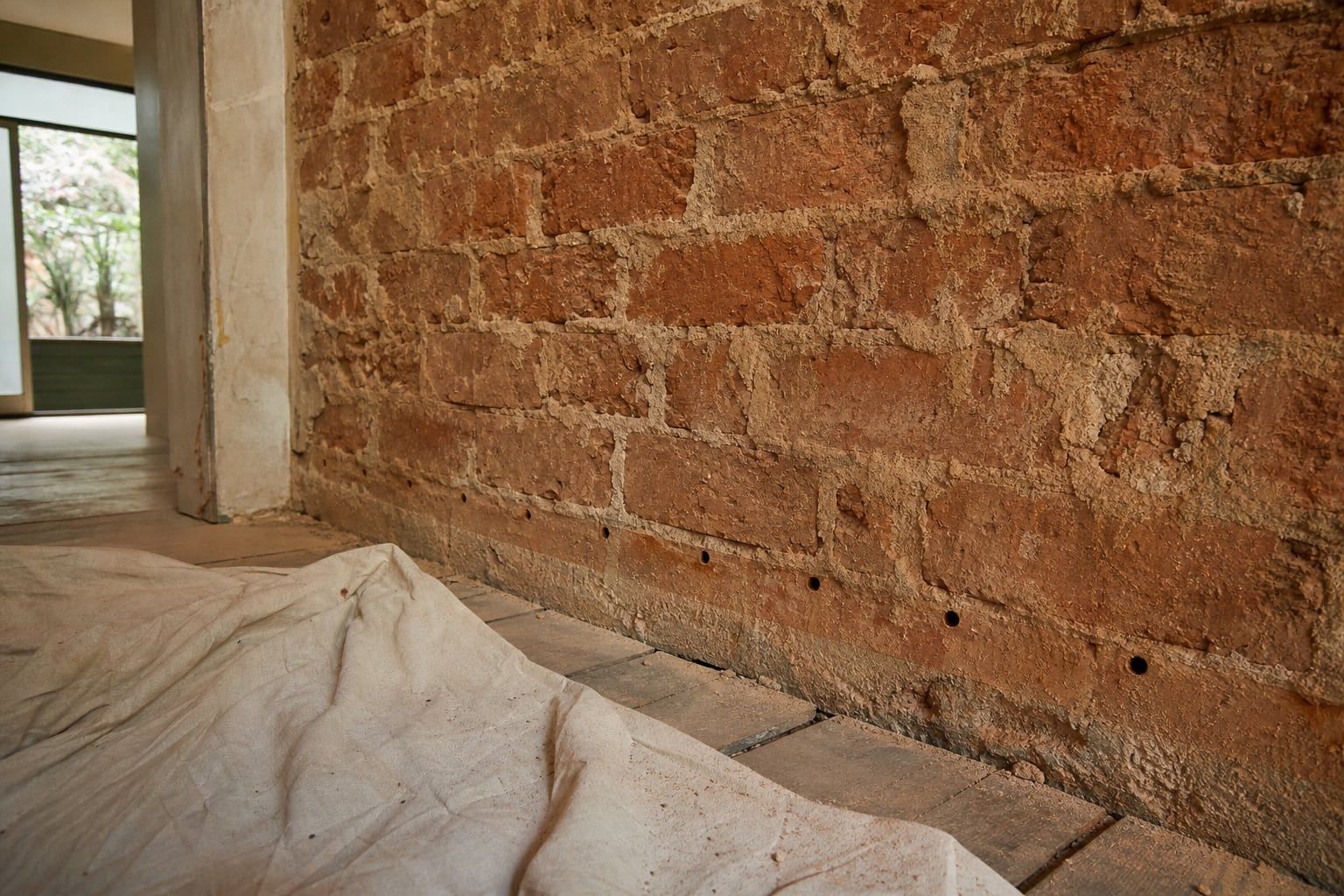
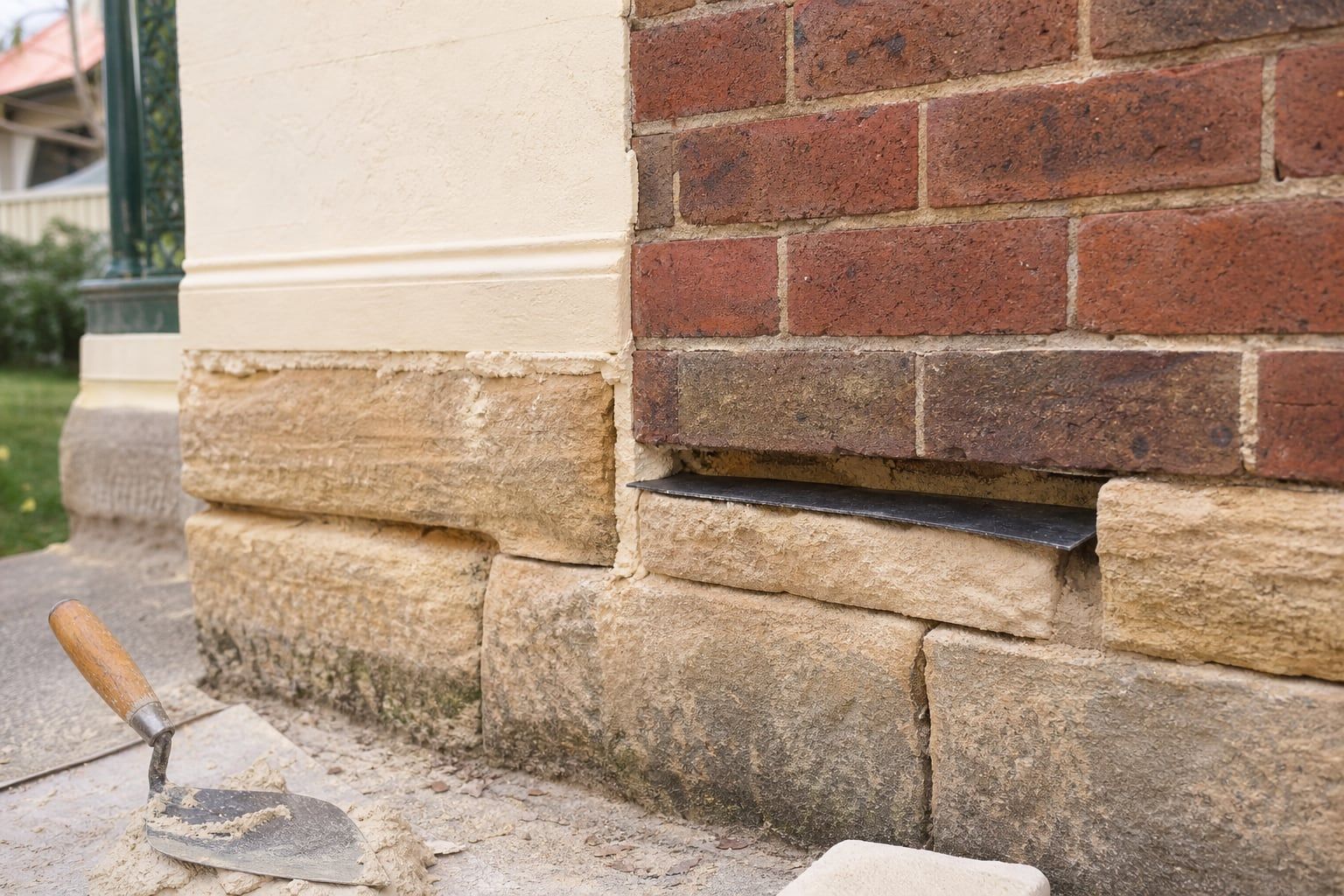
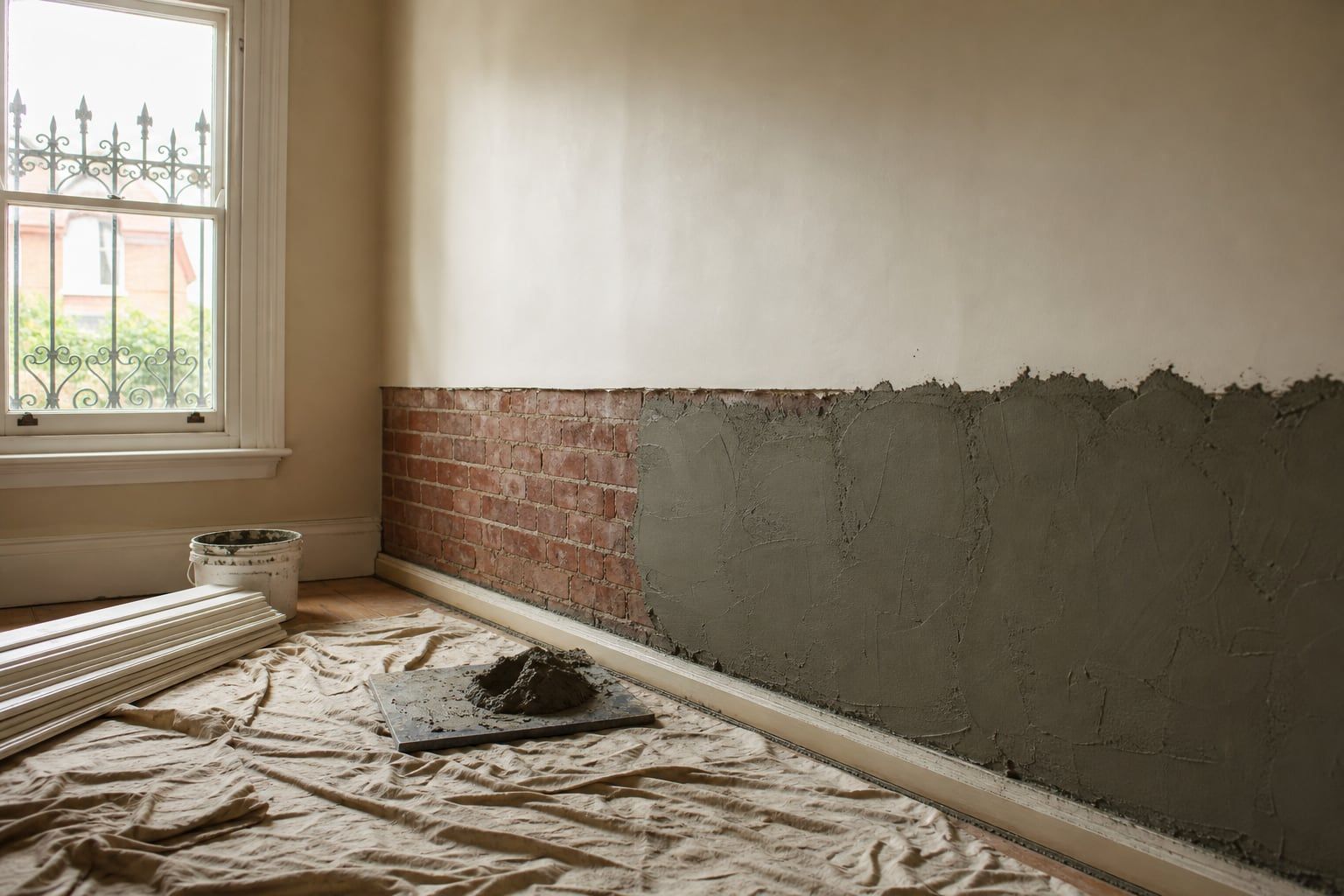
We test each wall separately and check the subfloor where there’s access. Most brick walls are treated with a chemical damp course injected from inside, which suits terraces where the outside of a party wall belongs to a neighbour. Where mortar has crumbled or a wall is built of rubble stone, a physical damp course cut in short sections may suit it better. Salt-damaged plaster is removed and replaced with a salt-resistant render finished to match the room.
For back walls set into the slope, water is coming through the face of the wall rather than up from below, so waterproof tanking on the inside face is usually part of the fix.
Heritage and council
Forest Lodge is in the City of Sydney and is largely a heritage conservation area. Internal damp treatment and like-for-like repairs generally don’t need approval, but changes to the street front might. We keep original brick and stone and use lime-compatible materials, which suit these walls far better than cement.
Subfloors in Forest Lodge
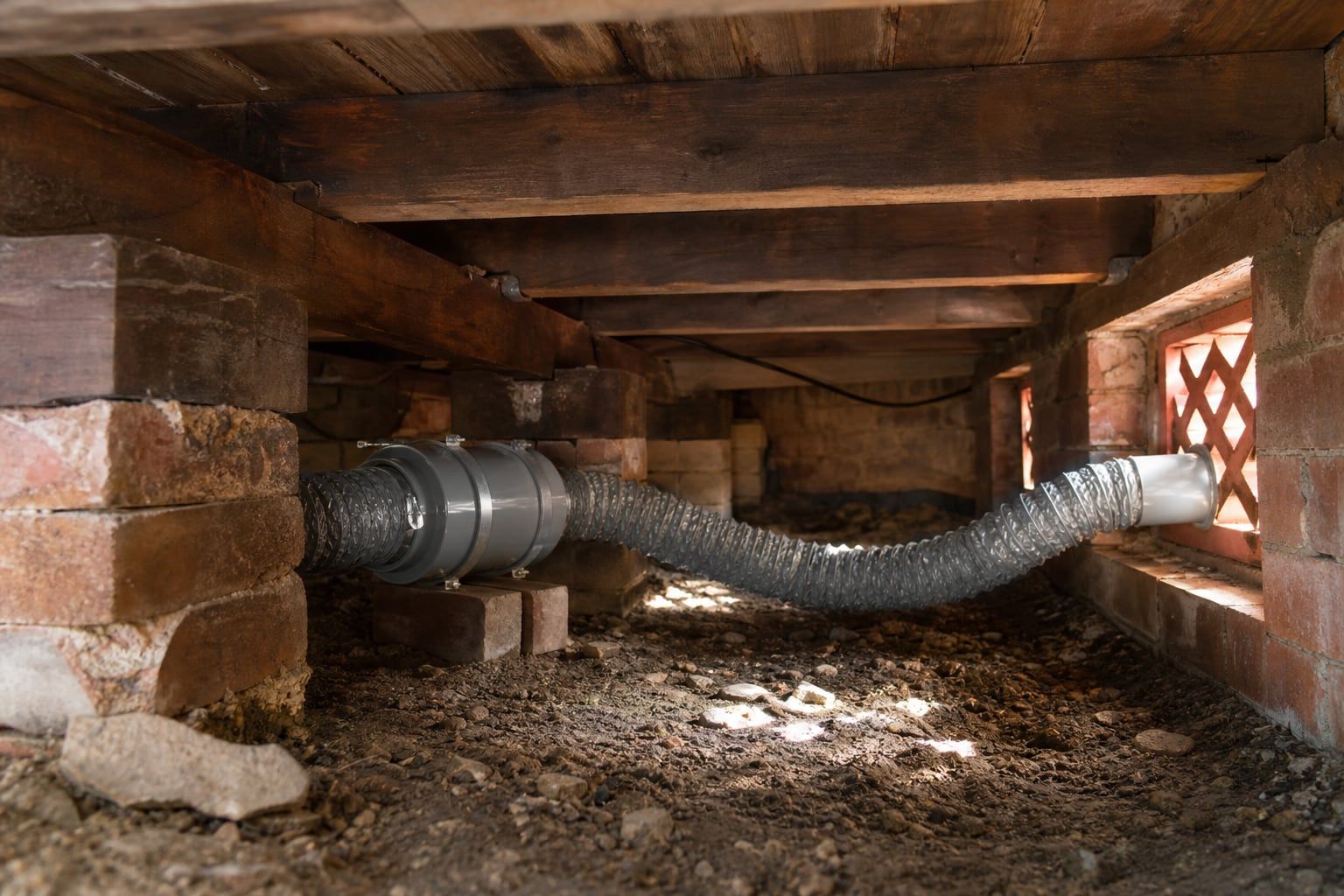
Terrace subfloors here are often very low, sometimes just a hand’s height, and divided by solid walls. With courtyards paved and rear additions enclosed, many get almost no air at all. Where readings point to the subfloor, a small fan system is usually the most practical way to dry it out.
Before you book
If there’s a brown line along your hallway walls, our guide to rising damp tide marks explains what it means. Our Forest Lodge inspections are free, and every quote is fixed and in writing. We also cover the streets around you, including rising damp in Glebe and rising damp in Camperdown.
Updated
Rising damp services in Forest Lodge
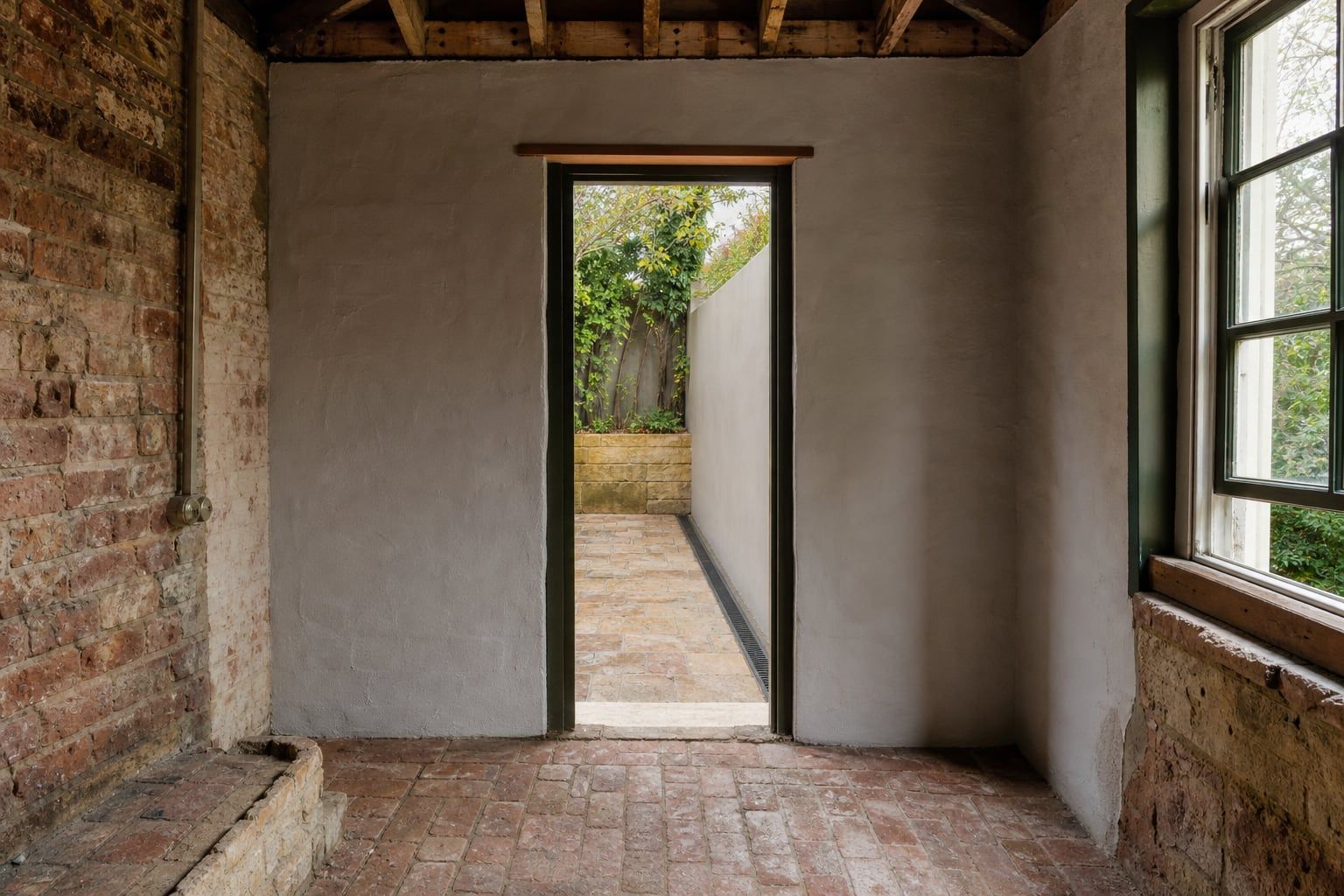
What we do for Forest Lodge homes, chosen to suit how each house was built.
Why Forest Lodge homeowners call us
15+ years on Inner West damp
Solid brick, sandstone footings and lime mortar are what we have worked on for more than 15 years, so the treatment is chosen for the wall, not the other way round.
Cause first
We measure moisture and check drainage, ground levels, leaks and ventilation before recommending a damp course, so you only pay for what fixes the problem.
Fixed-price quotes
You get a written, fixed-price quote after the inspection, with no obligation to go ahead.
How a Forest Lodge job runs
- We inspect and measureWe confirm it's genuinely rising damp, not a leak, and measure how far it has climbed.
- Install the damp courseWe inject or insert a new damp-proof barrier along the affected walls.
- Repair the plasterWe hack off salt-damaged render and replaster with a salt-resistant system.
- Dry out and checkThe wall dries over the following weeks, and we check back that it's holding.
Rising damp guides for Forest Lodge homeowners
- Tide marks on walls: what a rising damp tide mark meansWhy a brown or white line forms along the bottom of damp walls, how to tell rising damp from other causes, and what fixes it.
- Bubbling paint and blown plaster: is it rising damp?Why paint blisters and plaster crumbles near the floor of older homes, how to find the cause, and how to repair it so it stays fixed.
- Damp, musty smell in the house: finding the sourceWhere the musty smell in older homes comes from, the subfloor and wall problems behind it, and how to get rid of it for good.
- Mould low on walls and skirtings: condensation, rising damp or a leak?How to tell what is causing mould on your walls, why cleaning it off doesn't stop it, and how each cause is fixed.
- White salt deposits on walls: rising damp salt efflorescence explainedWhat the white crystals on damp walls are, why they keep coming back, and how salt-damaged walls are repaired.
Rising damp questions in Forest Lodge
Something else on your mind? Call 02 9158 9921 and ask.
Why is damp so common in Forest Lodge?
Forest Lodge is almost entirely Victorian terraces on small blocks, built in solid brick with early damp courses that have since failed. The streets fall towards Johnstons Creek and Wentworth Park, where the ground stays wetter.
Do I need to move out while you work?
No. We treat the house room by room, seal the work area and clean up each day. Most terraces are done in one to three days.
Do heritage terraces need special treatment?
Yes. Many Inner West terraces are heritage-listed or in conservation areas, so the fix has to be effective without damaging original brick, render or detailing. We use methods matched to the building fabric.
Is it rising damp, or something else?
Not always. Leaking gutters, blocked drains or lateral moisture can mimic rising damp. We diagnose the real cause first, so you don't pay for treatment you don't need.
How much does rising damp treatment cost?
It depends on the length of wall affected and the method. We give a fixed, no-obligation quote after a free on-site inspection.
How long until the wall dries out?
The new damp course works immediately, but a wall that's been wet for years needs time to release that moisture, typically a few months depending on wall thickness.
Which councils do you work in?
We work across Inner West Council, the City of Canada Bay, Burwood, Strathfield, and the Inner West parts of the City of Sydney and Canterbury-Bankstown.