Rising Damp in Lilyfield
Rising damp treatment and subfloor ventilation for Lilyfield terraces and cottages near Rozelle Bay.
Rising damp in Lilyfield homes
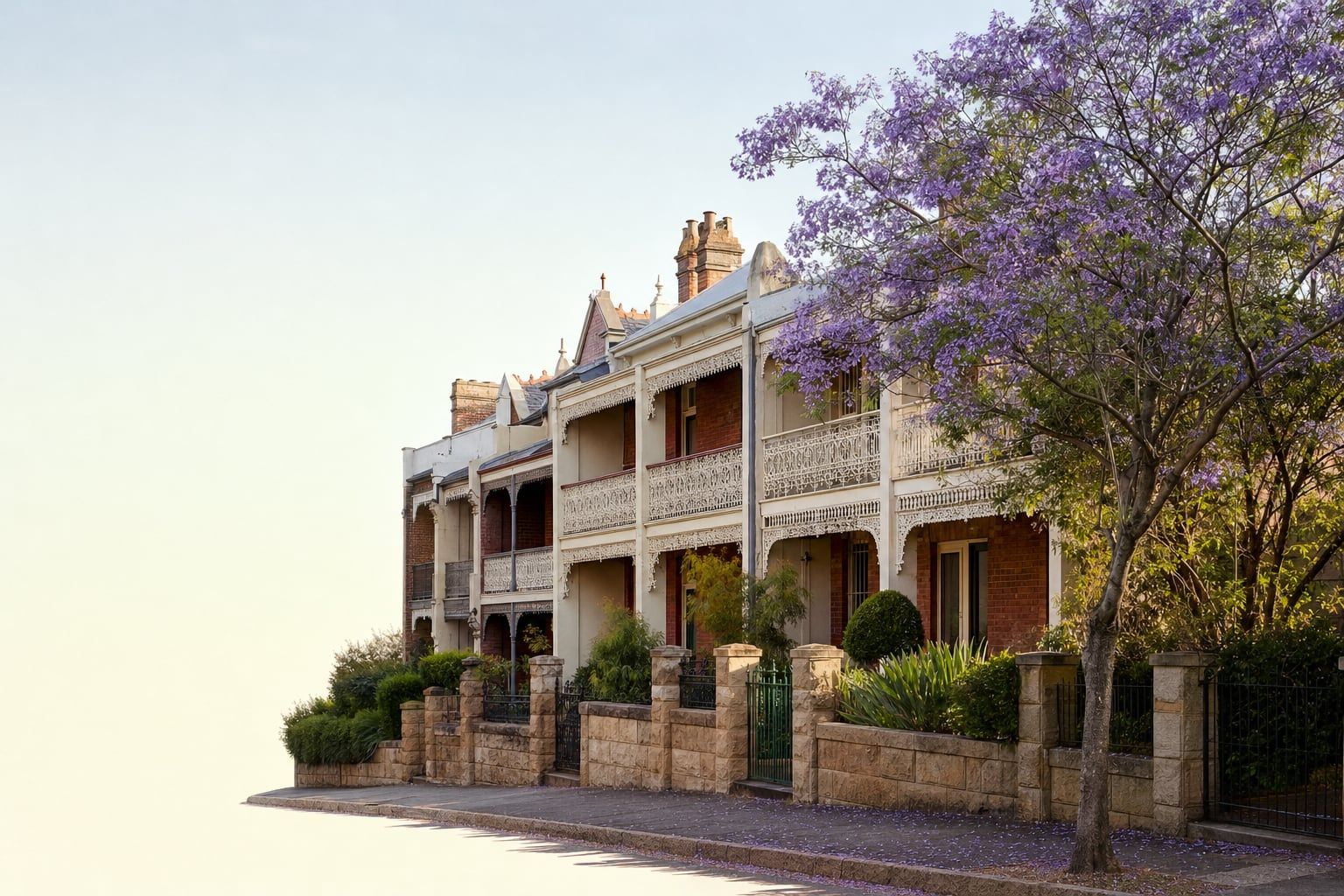
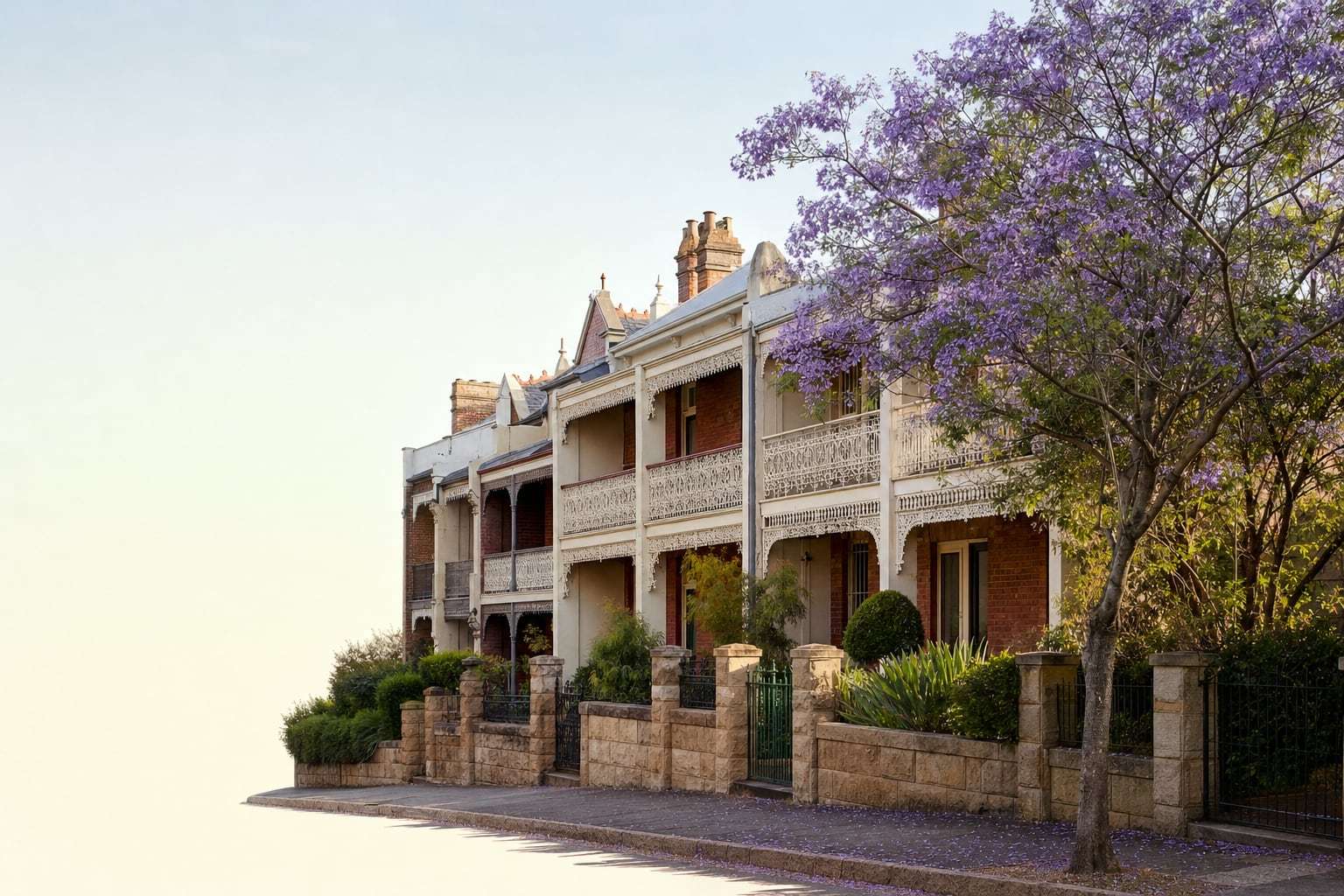
Lilyfield sits between Leichhardt and Rozelle, running from the high ground around Lilyfield Road and Callan Park down to the water at Rozelle Bay. Its housing is a mix of Victorian terraces, Federation semis and cottages, and later infill, with the light rail and the City West Link cutting along its edge. Most of the older homes were built of solid brick on sandstone or brick footings before modern damp courses, and many have been renovated several times since.
That mix is why rising damp turns up so often here. The original houses had weak protection against ground moisture, and later work has often made it worse rather than better.
Ground and water
The northern streets near Callan Park sit higher and drain reasonably well. As you move south and east towards Rozelle Bay and the light rail corridor, the land drops and the soil holds more water. Old creek lines that once ran into the bay are now piped or built over, but the ground still remembers them. Homes in those lower pockets tend to have the worst damp, and their subfloors are often wet after heavy rain.
What we usually find in Lilyfield
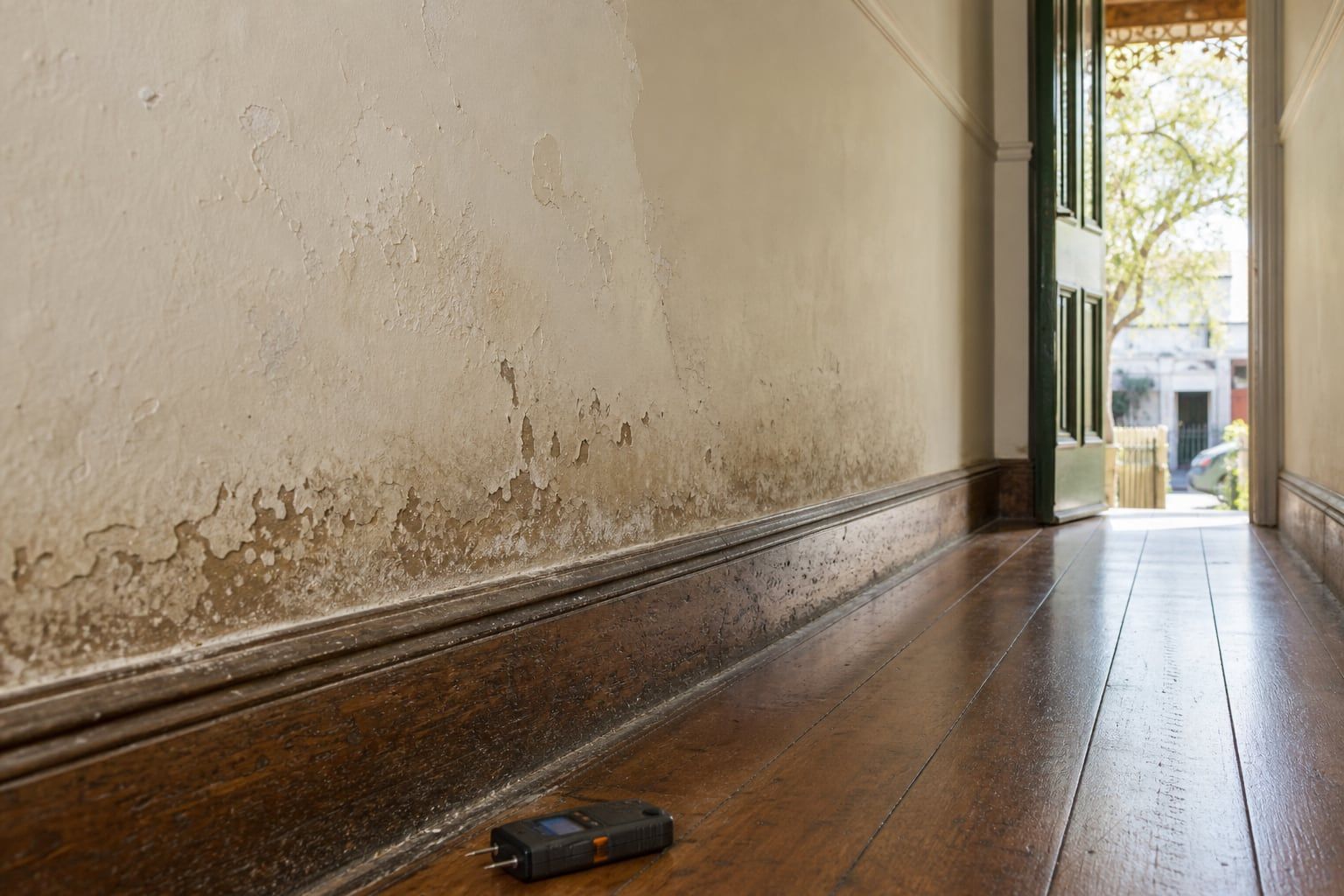
The most common pattern is a terrace or semi with a failed slate damp course, tide marks along the hallway and front rooms, and a rear extension that has closed off the subfloor. We also see:
- Courtyards and side paths laid too high, covering the damp course and the weep holes
- Downpipes discharging at the base of the wall instead of into stormwater
- Plasterboard fixed over damp brick during a renovation, hiding mould behind it
- Party walls carrying damp right through the middle of the house
- Lower-ground rooms on sloping blocks with water coming in from the side
How we treat Lilyfield homes
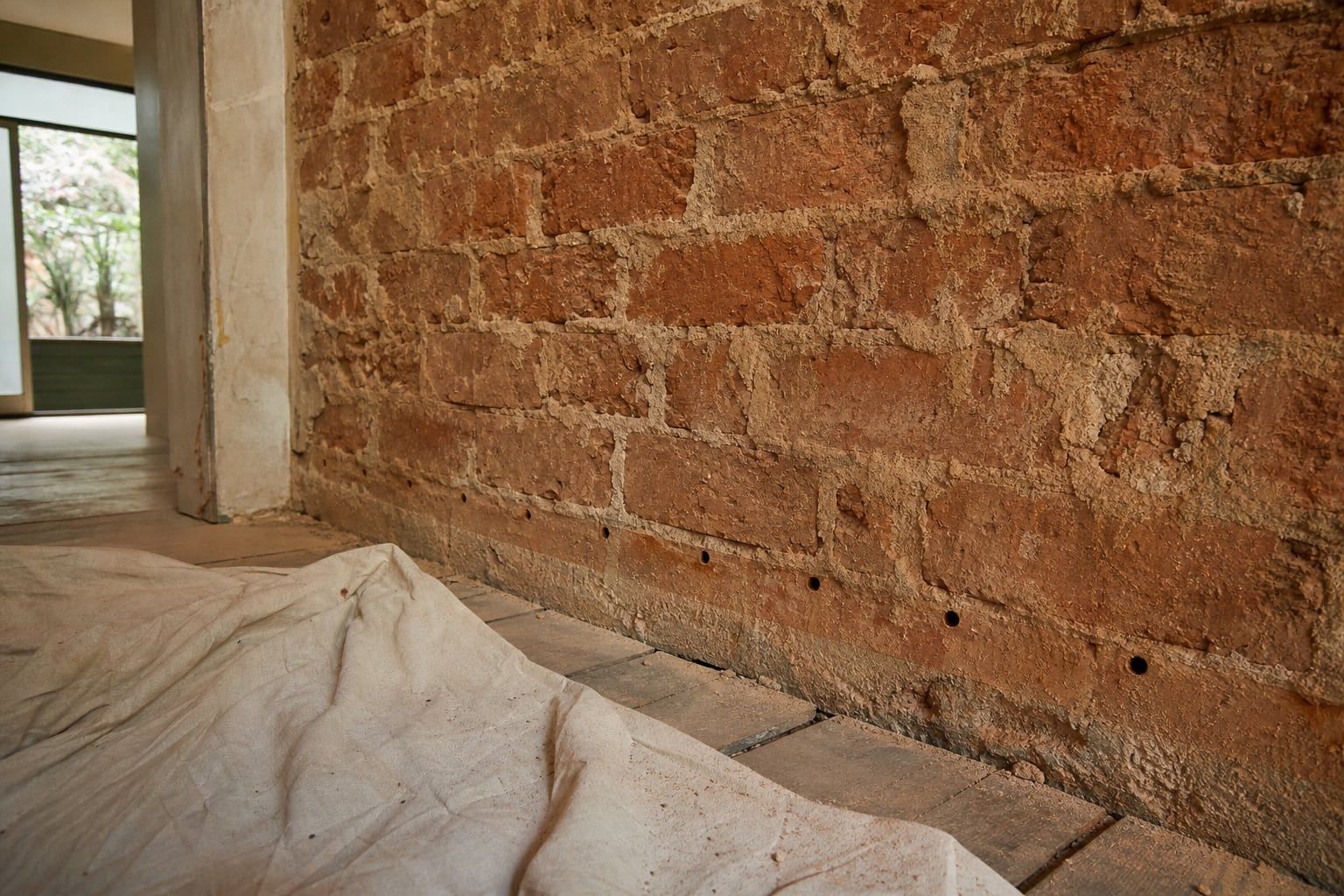
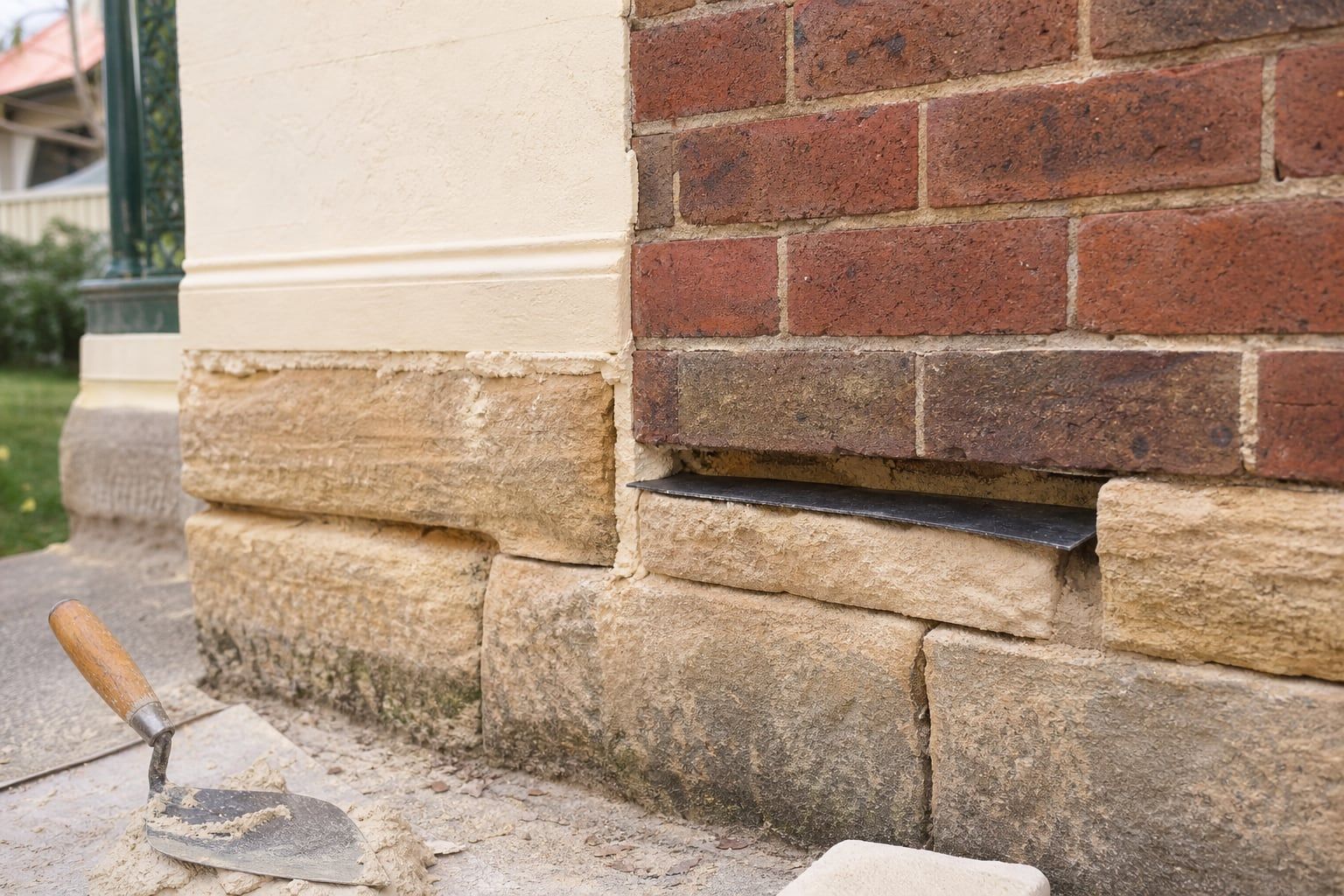
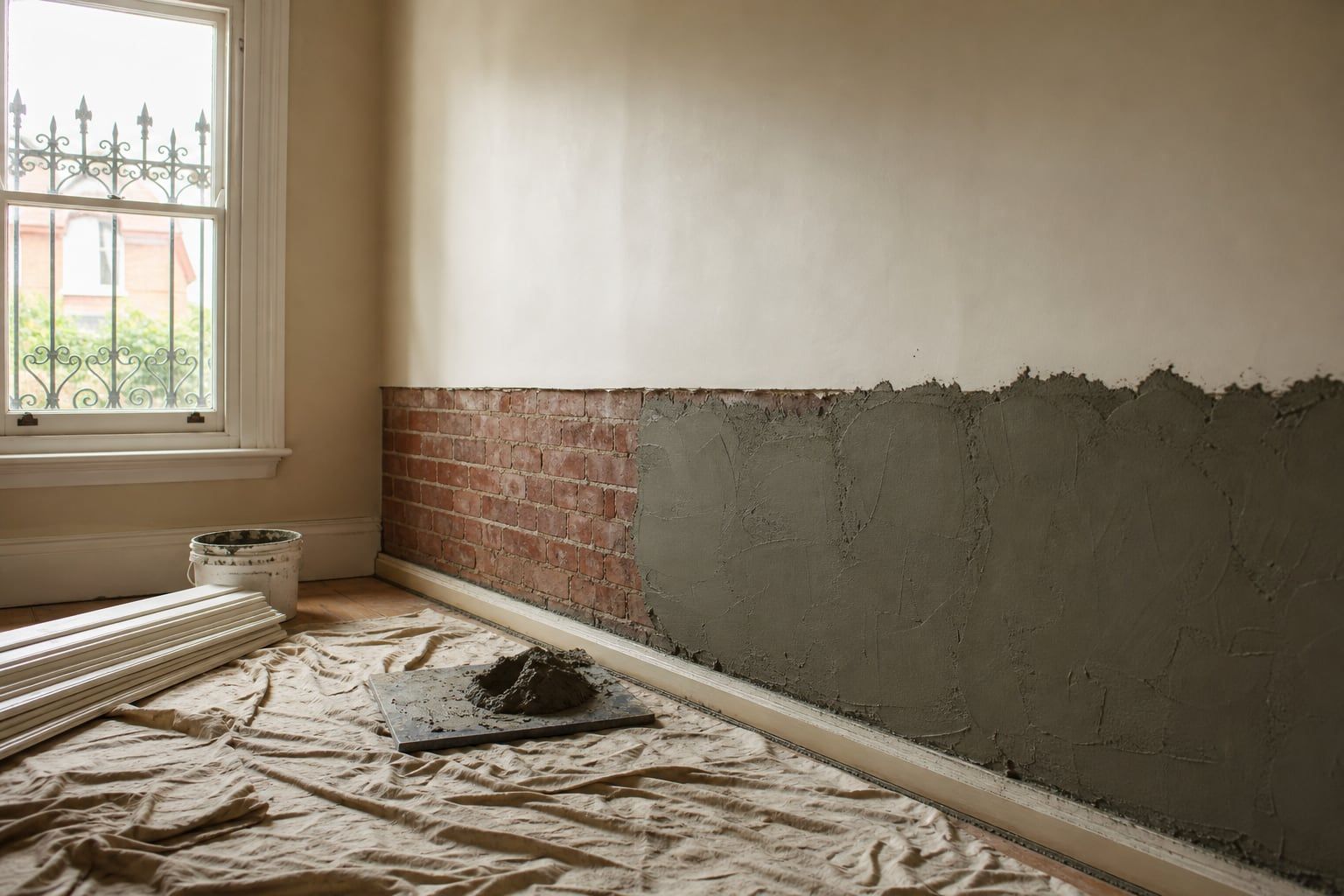
We take readings on every affected wall, check the subfloor and walk the outside of the house. Where the walls are drawing water up from the ground, the usual fix is a chemical damp course along the mortar joint, then salt-damaged plaster repair with a salt-resistant render once the wall is ready. Outside, we make sure paving and garden beds sit below the new barrier, otherwise water simply goes around it.
If a wall has crumbling mortar or is built partly in stone, a cut-in membrane may suit it better, and we explain the choice at the inspection.
Subfloors in Lilyfield
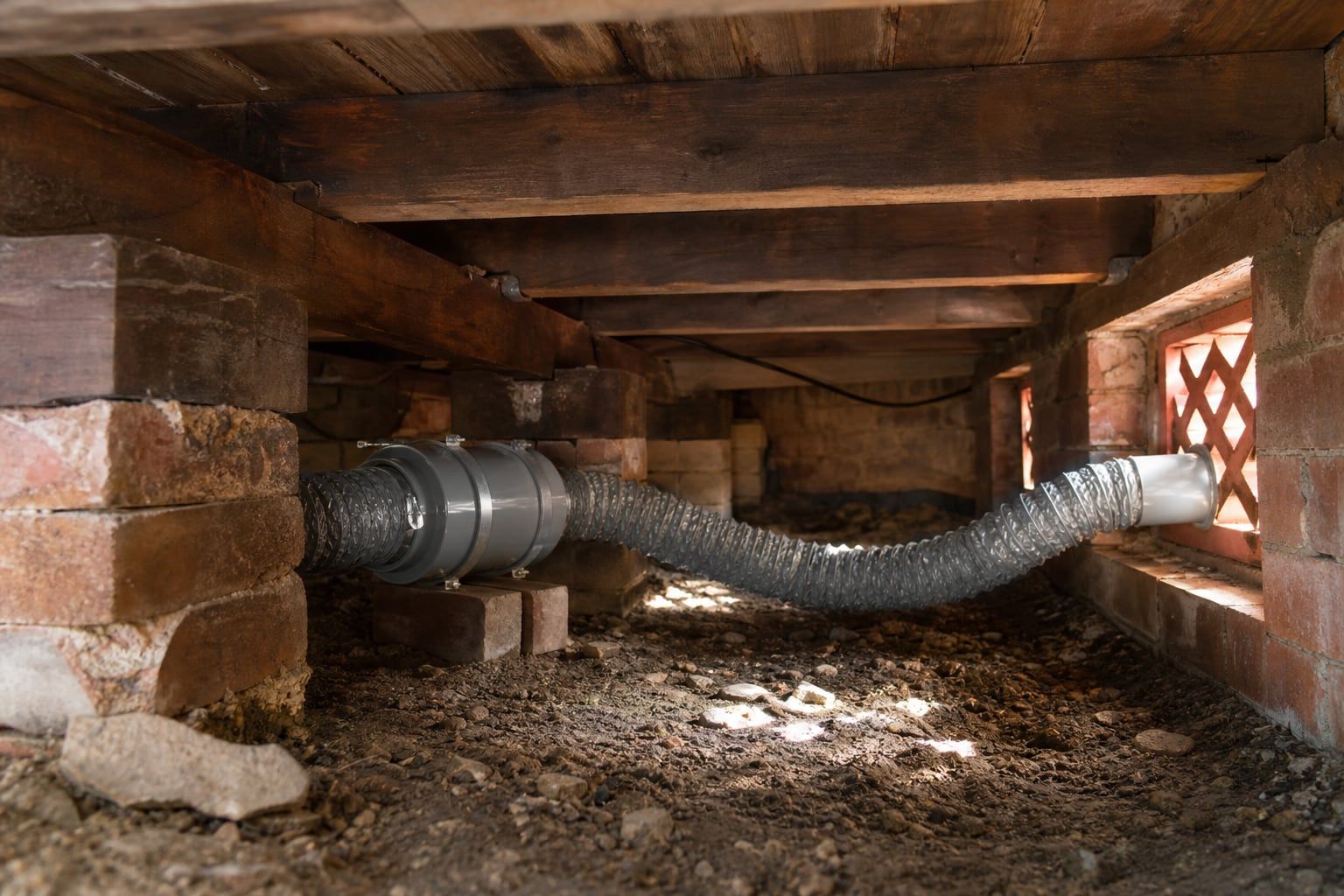
Terraces in Lilyfield usually sit on low timber floors, with solid party walls dividing the subfloor into narrow bays. Air struggles to move from front to back, especially where a rear addition has blocked the back vents. Where the subfloor is part of the problem, we add subfloor ventilation, often a small fan system that pulls damp air out and draws dry air in. It also helps treated walls dry faster.
Heritage and council
Parts of Lilyfield are within Inner West Council heritage conservation areas. Damp treatment inside the house and repairs that match the original materials generally don’t need approval, but anything that changes the street front might. We keep original brickwork and use mortars and renders suited to lime-built walls.
Before you book
If you’ve noticed a stale smell that’s worst first thing in the morning, our guide to the musty damp smell explains where it usually comes from. Booking a Lilyfield inspection costs nothing, and you get a written fixed-price quote. We also cover the suburbs around you, including rising damp in Leichhardt and rising damp in Rozelle.
Updated
Rising damp services in Lilyfield
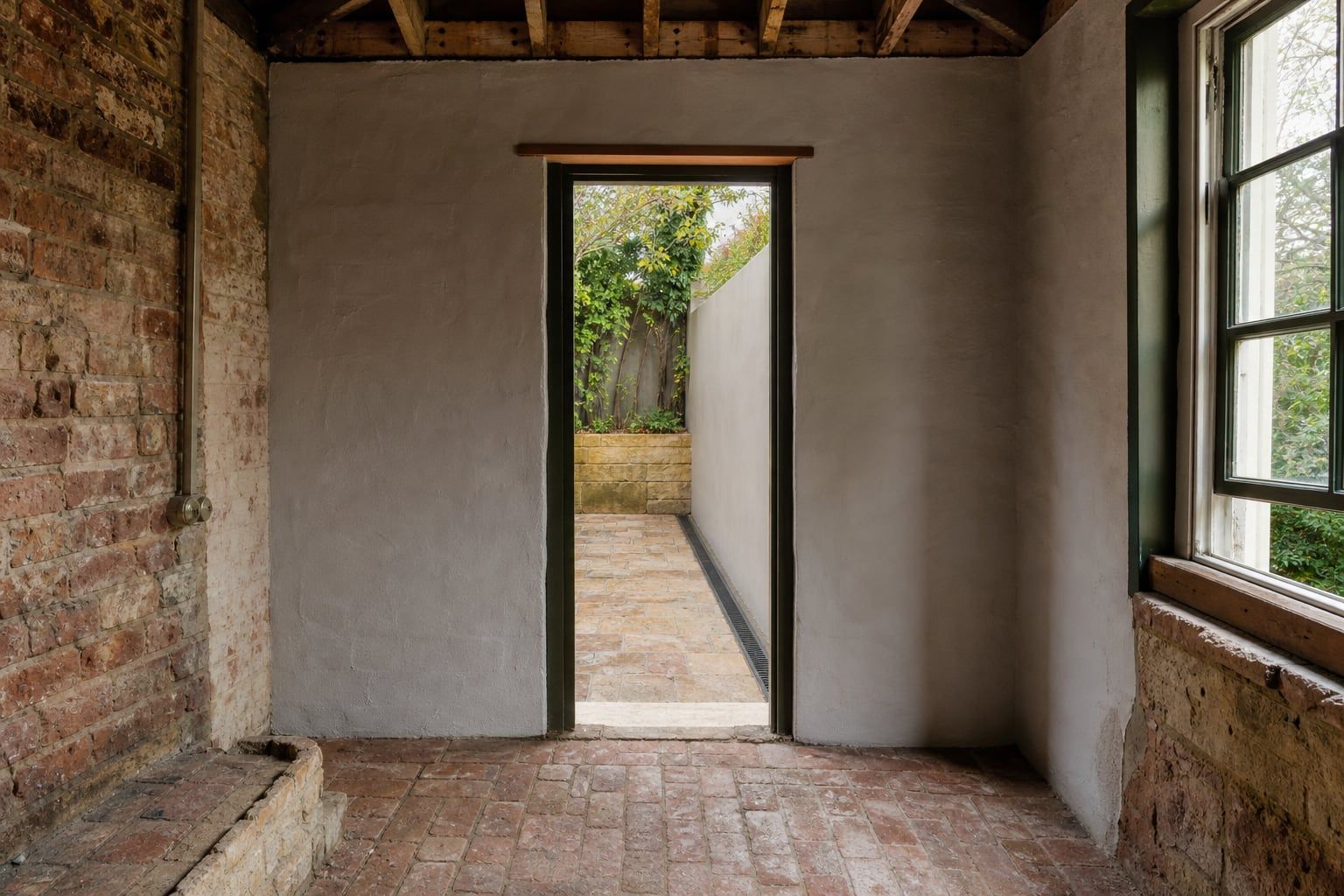
What we do for Lilyfield homes, chosen to suit how each house was built.
Why Lilyfield homeowners call us
15+ years on Inner West damp
Solid brick, sandstone footings and lime mortar are what we have worked on for more than 15 years, so the treatment is chosen for the wall, not the other way round.
Cause first
We measure moisture and check drainage, ground levels, leaks and ventilation before recommending a damp course, so you only pay for what fixes the problem.
Fixed-price quotes
You get a written, fixed-price quote after the inspection, with no obligation to go ahead.
How a Lilyfield job runs
- We inspect and measureWe confirm it's genuinely rising damp, not a leak, and measure how far it has climbed.
- Install the damp courseWe inject or insert a new damp-proof barrier along the affected walls.
- Repair the plasterWe hack off salt-damaged render and replaster with a salt-resistant system.
- Dry out and checkThe wall dries over the following weeks, and we check back that it's holding.
Rising damp guides for Lilyfield homeowners
- Tide marks on walls: what a rising damp tide mark meansWhy a brown or white line forms along the bottom of damp walls, how to tell rising damp from other causes, and what fixes it.
- Bubbling paint and blown plaster: is it rising damp?Why paint blisters and plaster crumbles near the floor of older homes, how to find the cause, and how to repair it so it stays fixed.
- Damp, musty smell in the house: finding the sourceWhere the musty smell in older homes comes from, the subfloor and wall problems behind it, and how to get rid of it for good.
- Mould low on walls and skirtings: condensation, rising damp or a leak?How to tell what is causing mould on your walls, why cleaning it off doesn't stop it, and how each cause is fixed.
- White salt deposits on walls: rising damp salt efflorescence explainedWhat the white crystals on damp walls are, why they keep coming back, and how salt-damaged walls are repaired.
Rising damp questions in Lilyfield
Something else on your mind? Call 02 9158 9921 and ask.
Does living near Rozelle Bay make damp worse in Lilyfield?
It can. Streets on the lower side of Lilyfield, towards Rozelle Bay and the old creek lines, sit on damper ground than those on the ridge. Homes there are more likely to have both rising damp in the walls and a wet subfloor.
How long does damp treatment take in a Lilyfield terrace?
Most single-storey terraces and cottages are treated in one to three days, depending on how many walls are affected and how much plaster has to come off. Drying time afterwards is longer, and we give you an estimate in the quote.
Do heritage terraces need special treatment?
Yes. Many Inner West terraces are heritage-listed or in conservation areas, so the fix has to be effective without damaging original brick, render or detailing. We use methods matched to the building fabric.
Is it rising damp, or something else?
Not always. Leaking gutters, blocked drains or lateral moisture can mimic rising damp. We diagnose the real cause first, so you don't pay for treatment you don't need.
How much does rising damp treatment cost?
It depends on the length of wall affected and the method. We give a fixed, no-obligation quote after a free on-site inspection.
How long until the wall dries out?
The new damp course works immediately, but a wall that's been wet for years needs time to release that moisture, typically a few months depending on wall thickness.
Which councils do you work in?
We work across Inner West Council, the City of Canada Bay, Burwood, Strathfield, and the Inner West parts of the City of Sydney and Canterbury-Bankstown.