Rising Damp in Lewisham
Damp courses, salt-resistant replastering and subfloor ventilation for Lewisham's terraces and cottages.
Rising damp in Lewisham homes
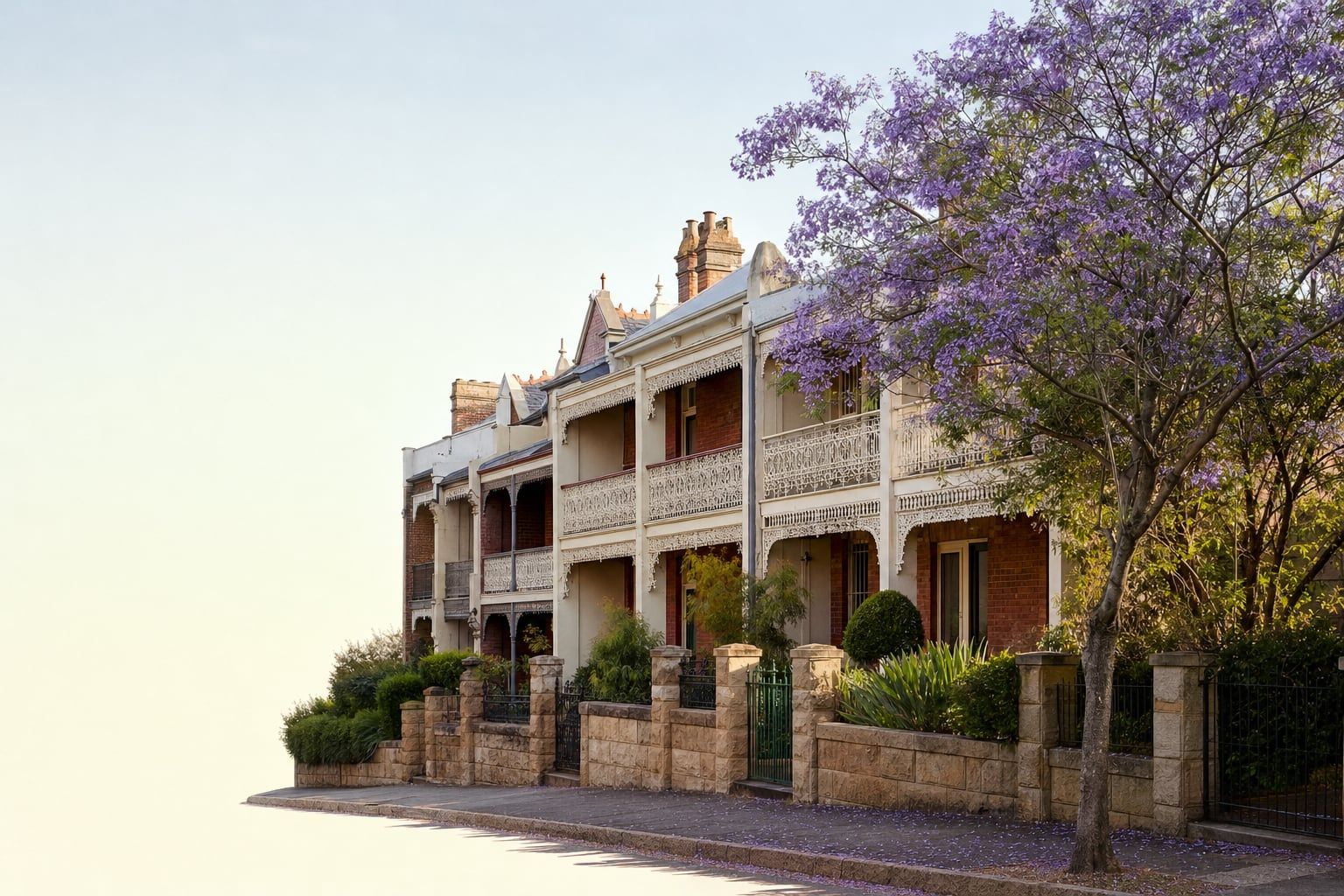
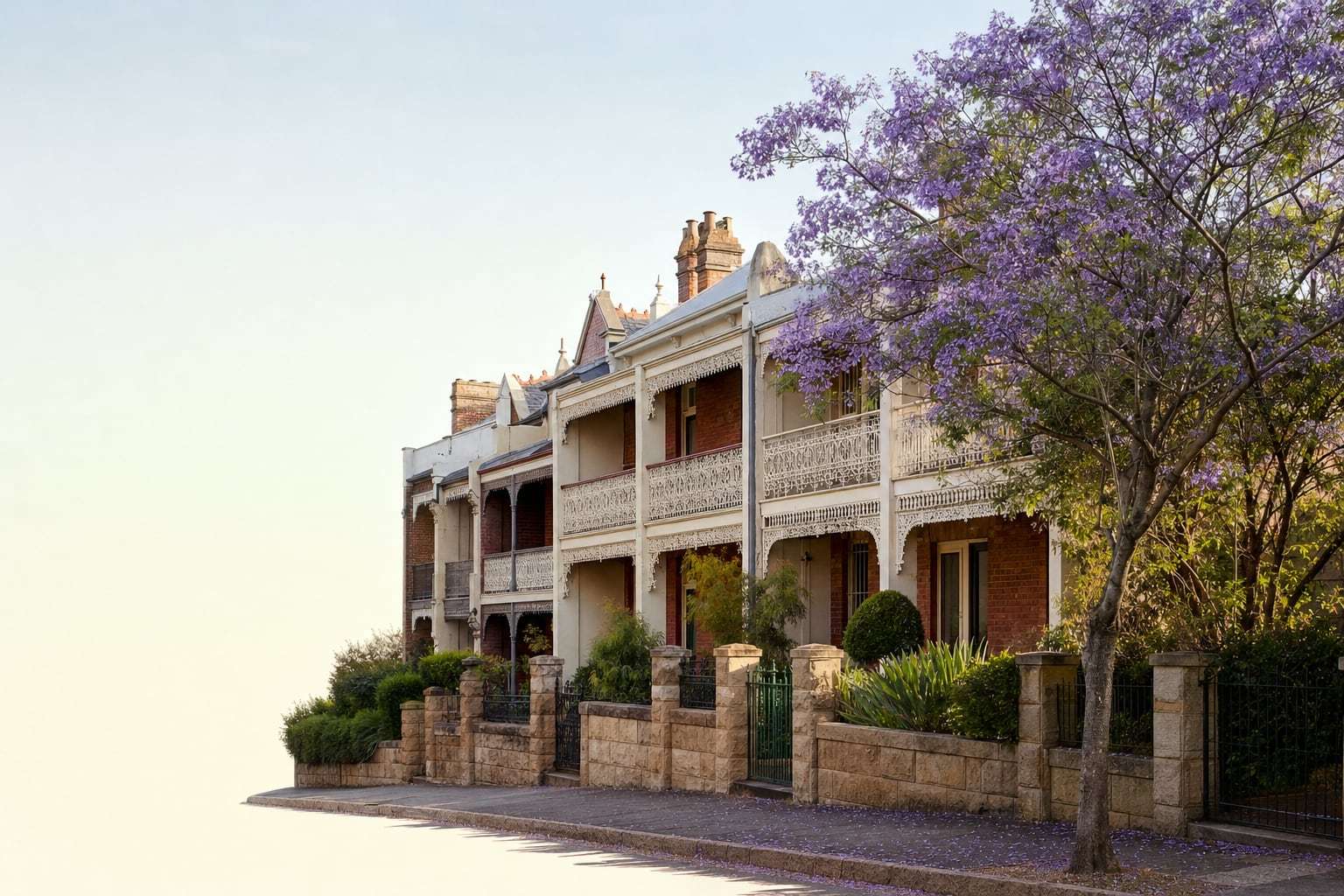
Lewisham is a small suburb wedged between Petersham, Summer Hill and Dulwich Hill, with the main railway line along its north and the light rail cutting through its south. It’s easy to drive through without noticing, but its streets hold a dense mix of Victorian terraces, Federation semis and cottages, and older freestanding homes, most of them built of solid brick on shallow footings between the 1880s and the 1910s.
Those houses had basic slate or bitumen damp courses at best. After a century of settling, garden work and renovations, many no longer stop ground moisture, and rising damp is a common reason Lewisham owners call us.
Streets and ground
Lewisham sits in a shallow valley. The land falls from the ridges at Petersham and Summer Hill towards the low ground around the light rail line and the old Long Cove Creek catchment, now the Hawthorne Canal. The clay soils hold water, and the lower streets near the canal and the light rail stay damp well after rain stops. That shows up in the houses: walls on the lower side of a block and rooms closest to the ground tend to have the highest readings.
Houses here are built close together, often with narrow side passages that never see the sun. Brick in those passages dries slowly, and moss on the lower courses is a good sign the wall is wet.
What we usually find in Lewisham
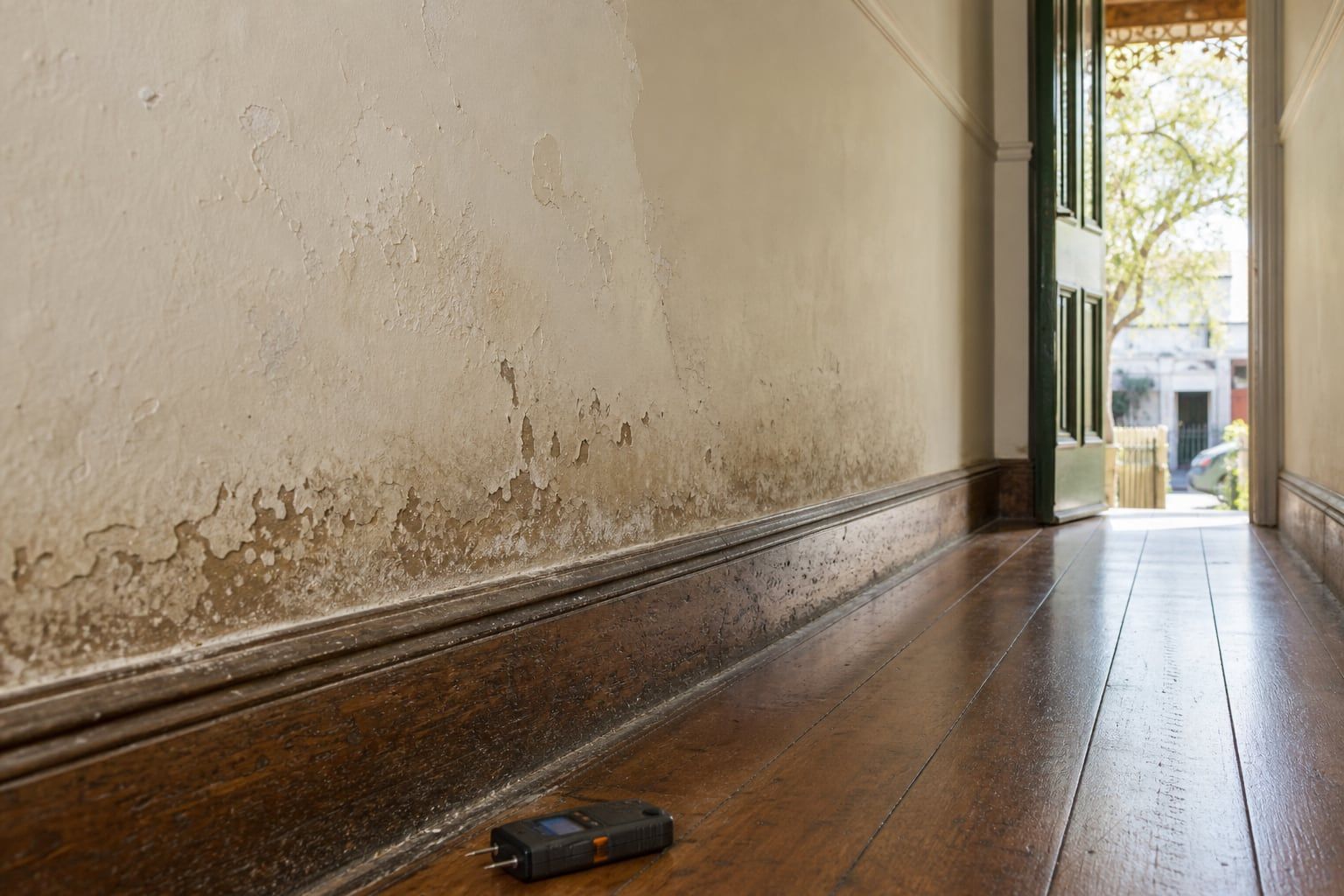
- Shared walls in semis and terraces with tide marks on both sides
- Side passages where paving sits above the damp course and the brick stays wet
- Cement render on the base of walls, trapping water and pushing salt higher
- Rear additions built on slabs that closed off the back of the subfloor
- Painted-over salt in hallways, bubbling again within months
- Damp, musty bedrooms on the shady side of the house
Many homes have been renovated more than once, and the most common mistake we see is new plasterboard fixed straight over a damp, salty wall. It looks fine for a year, then mould appears behind it.
How we treat Lewisham homes
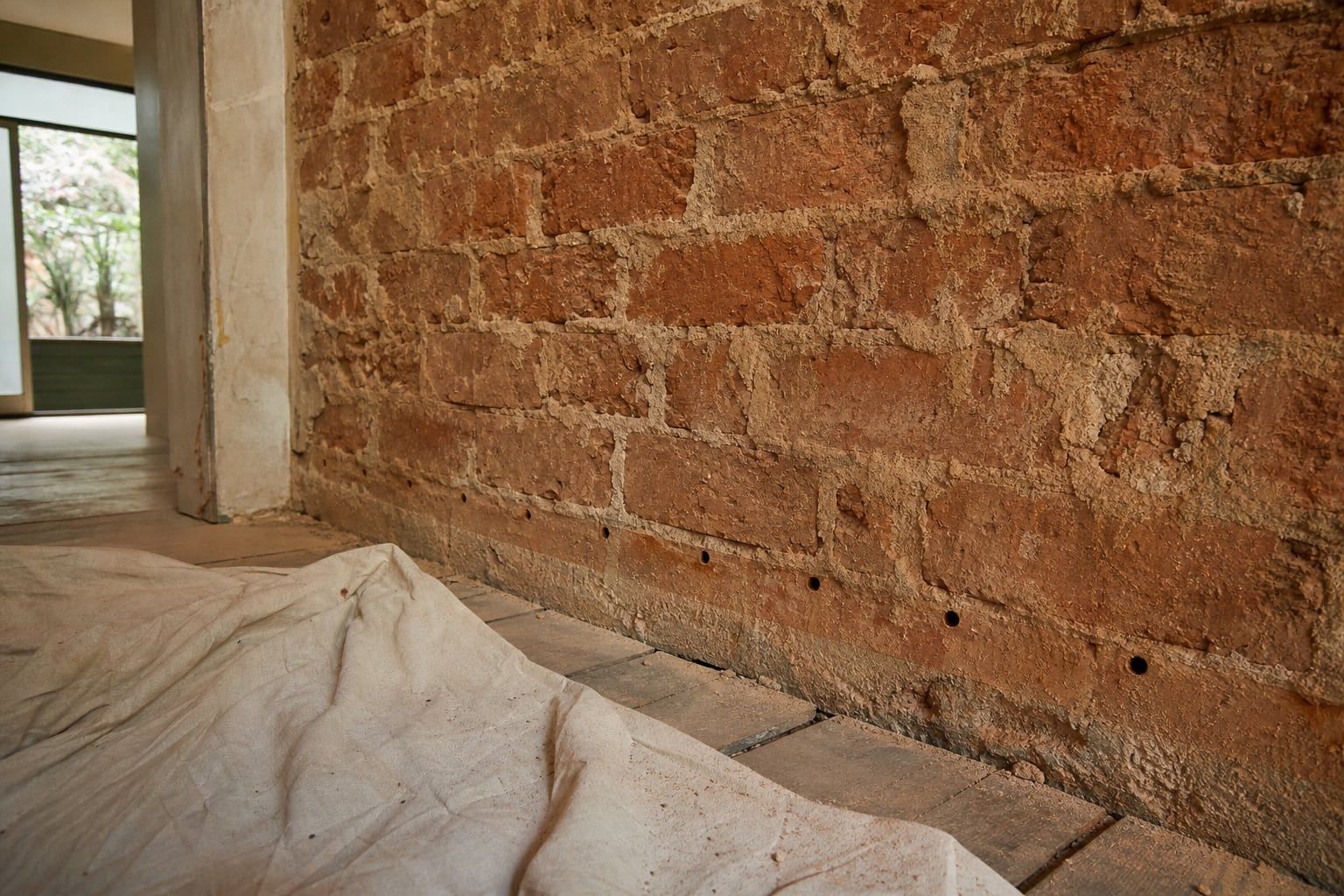
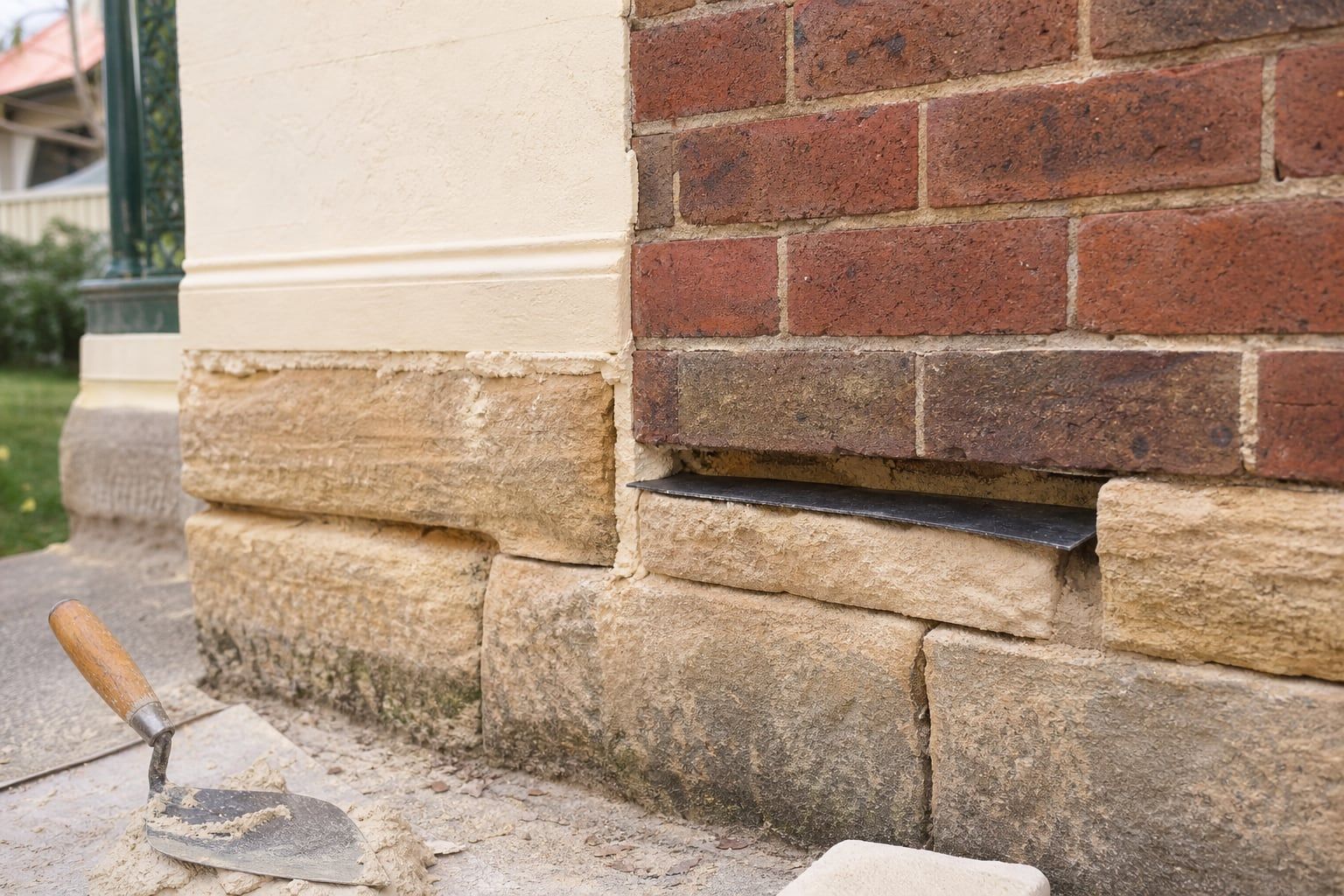
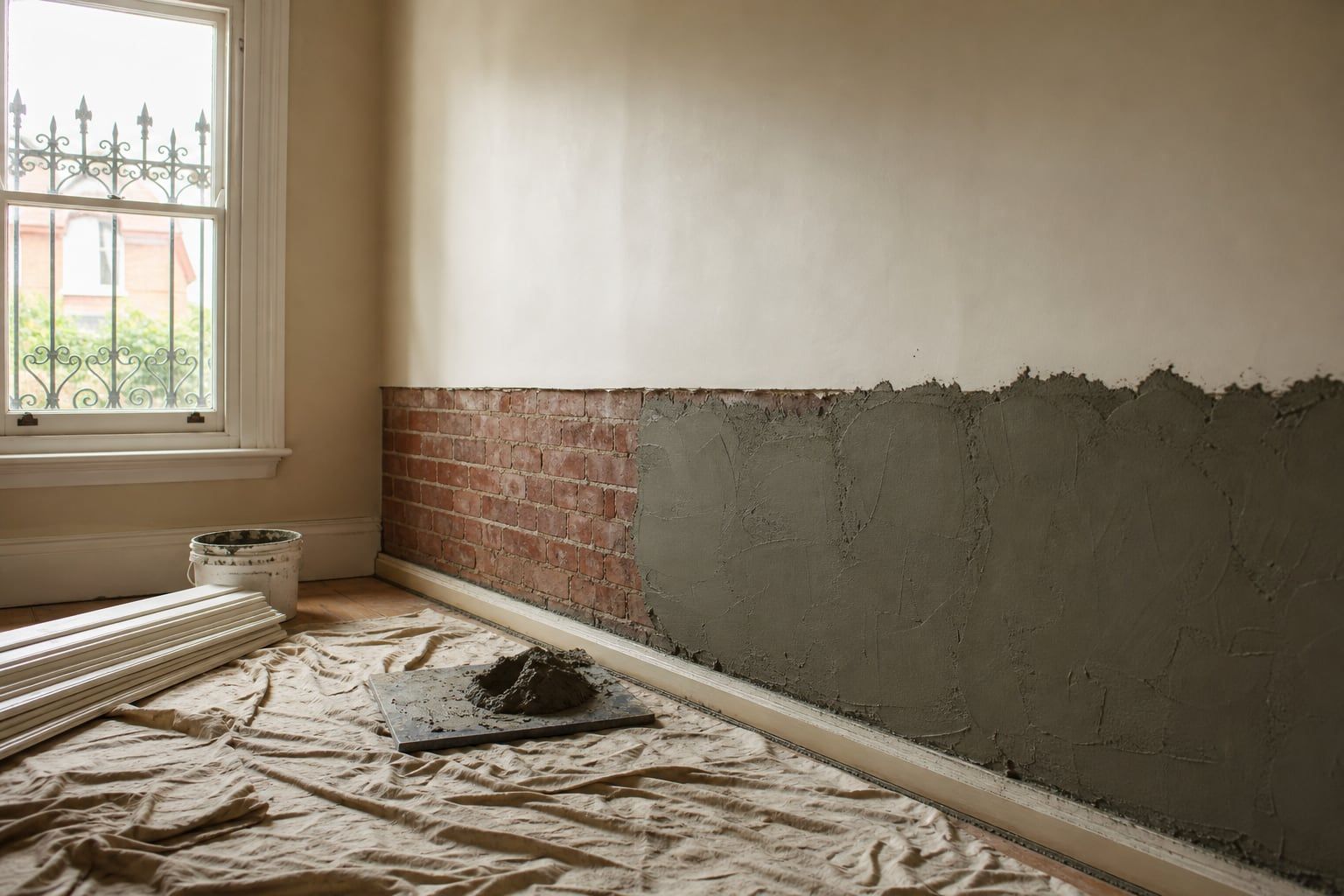
We test each affected wall at several heights and check under the floor wherever we can get access. Most solid brick walls in Lewisham are treated with a chemical damp course injected along a mortar joint just above ground level, from inside where a neighbour shares the wall. Once the barrier is in, salt-laden plaster comes off to a safe margin above the old tide mark and is replaced with a salt-resistant render that lets the wall keep drying.
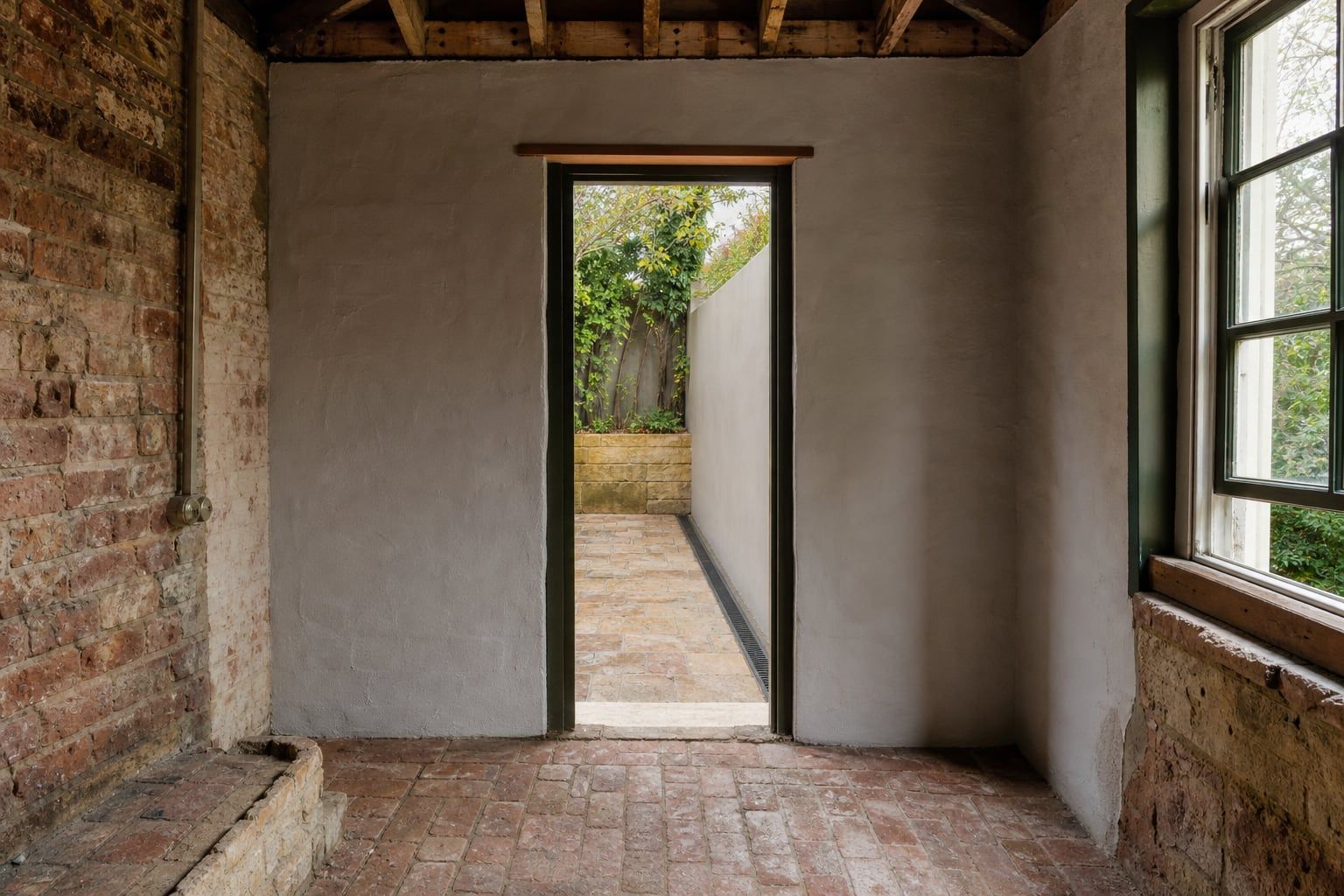
Outside, we lower paving in side passages where it bridges the new barrier, and reconnect downpipes that drain onto the base of the wall. Those small fixes are often what stop damp coming back.
Subfloors in Lewisham
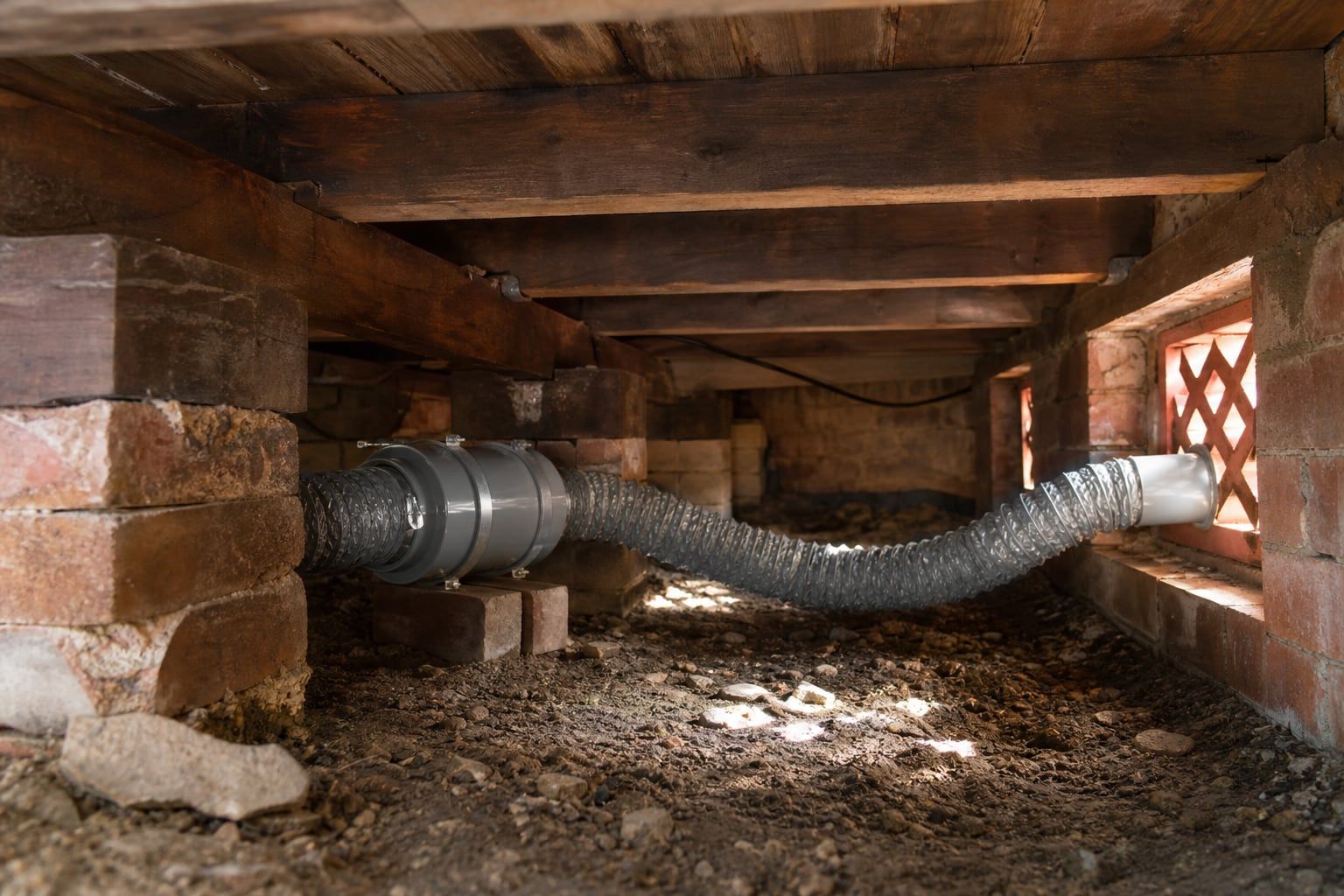
Terraces and semis here usually have low subfloors divided by brick walls, with a vent or two at the front and back. Where the back is now blocked by an addition, air barely moves. If readings show damp air under the floor, we include subfloor ventilation in the quote, typically a small fan system that draws damp air out and lets dry air in. It also speeds up drying of the treated walls above.
Heritage and council
Parts of Lewisham are within Inner West Council heritage conservation areas. Internal damp treatment and like-for-like repairs generally don’t need approval, but changes to front walls and fences might. We keep original brickwork and use lime-compatible mortars and renders that suit old walls.
Before you book
If there’s white powder or crumbling plaster at the base of your walls, our guide to salt deposits on walls explains what it is. A free inspection in Lewisham comes with a written, fixed-price quote and no obligation. We also work in the suburbs around you, including rising damp in Petersham and rising damp in Summer Hill.
Updated
Rising damp services in Lewisham
What we do for Lewisham homes, chosen to suit how each house was built.
Why Lewisham homeowners call us
15+ years on Inner West damp
Solid brick, sandstone footings and lime mortar are what we have worked on for more than 15 years, so the treatment is chosen for the wall, not the other way round.
Cause first
We measure moisture and check drainage, ground levels, leaks and ventilation before recommending a damp course, so you only pay for what fixes the problem.
Fixed-price quotes
You get a written, fixed-price quote after the inspection, with no obligation to go ahead.
How a Lewisham job runs
- We inspect and measureWe confirm it's genuinely rising damp, not a leak, and measure how far it has climbed.
- Install the damp courseWe inject or insert a new damp-proof barrier along the affected walls.
- Repair the plasterWe hack off salt-damaged render and replaster with a salt-resistant system.
- Dry out and checkThe wall dries over the following weeks, and we check back that it's holding.
Rising damp guides for Lewisham homeowners
- Tide marks on walls: what a rising damp tide mark meansWhy a brown or white line forms along the bottom of damp walls, how to tell rising damp from other causes, and what fixes it.
- Bubbling paint and blown plaster: is it rising damp?Why paint blisters and plaster crumbles near the floor of older homes, how to find the cause, and how to repair it so it stays fixed.
- Damp, musty smell in the house: finding the sourceWhere the musty smell in older homes comes from, the subfloor and wall problems behind it, and how to get rid of it for good.
- Mould low on walls and skirtings: condensation, rising damp or a leak?How to tell what is causing mould on your walls, why cleaning it off doesn't stop it, and how each cause is fixed.
- White salt deposits on walls: rising damp salt efflorescence explainedWhat the white crystals on damp walls are, why they keep coming back, and how salt-damaged walls are repaired.
Rising damp questions in Lewisham
Something else on your mind? Call 02 9158 9921 and ask.
Why are Lewisham homes near the light rail often damp?
The light rail follows an old railway cutting and the low ground beside it, where soils stay wetter for longer. Homes on those lower streets often have both rising damp in their walls and damp subfloors.
Can you treat damp in a semi-detached house?
Yes. We treat your side of the shared wall along its full length, plus any other affected walls. The barrier is injected from inside, so we don't need access to next door.
Do heritage terraces need special treatment?
Yes. Many Inner West terraces are heritage-listed or in conservation areas, so the fix has to be effective without damaging original brick, render or detailing. We use methods matched to the building fabric.
Is it rising damp, or something else?
Not always. Leaking gutters, blocked drains or lateral moisture can mimic rising damp. We diagnose the real cause first, so you don't pay for treatment you don't need.
How much does rising damp treatment cost?
It depends on the length of wall affected and the method. We give a fixed, no-obligation quote after a free on-site inspection.
How long until the wall dries out?
The new damp course works immediately, but a wall that's been wet for years needs time to release that moisture, typically a few months depending on wall thickness.
Which councils do you work in?
We work across Inner West Council, the City of Canada Bay, Burwood, Strathfield, and the Inner West parts of the City of Sydney and Canterbury-Bankstown.