Rising Damp in Petersham
Damp courses and salt-resistant replastering for Petersham's Victorian terraces and Federation semis.
Rising damp in Petersham homes
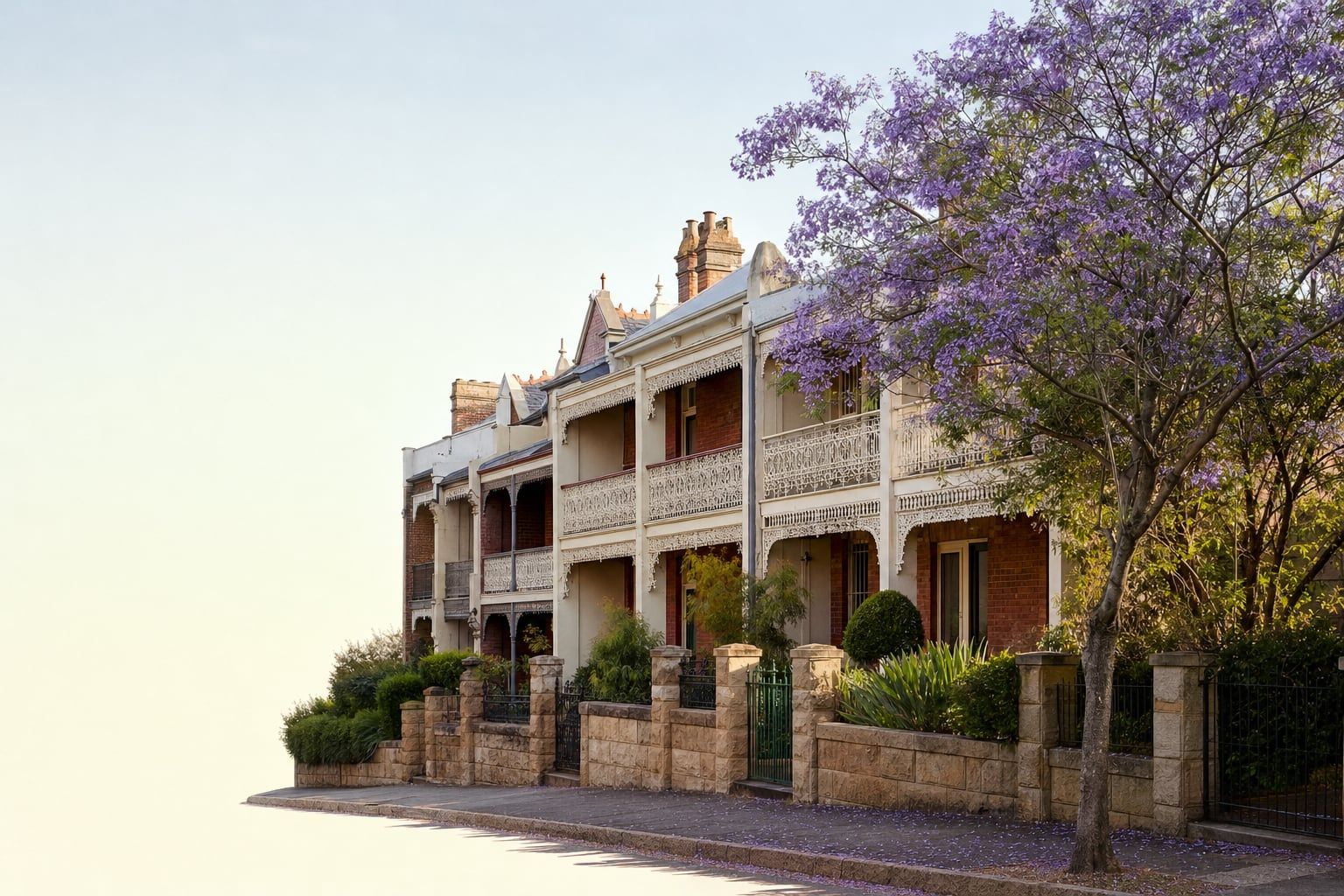
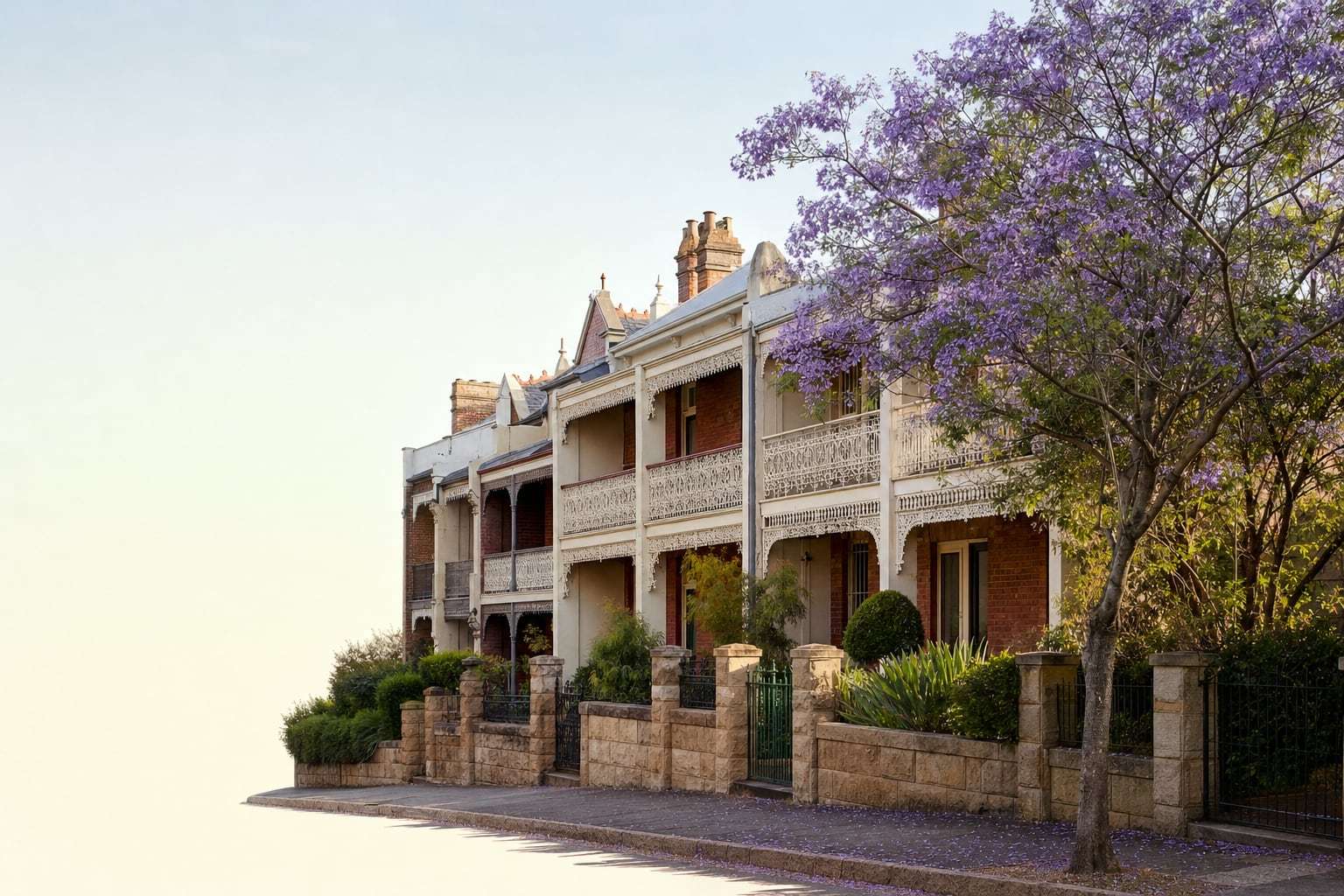
Petersham is one of the Inner West’s established older suburbs, stretching from Parramatta Road down past the railway line and Petersham Park towards Lewisham and Stanmore. Its streets hold rows of Victorian terraces, Italianate villas, Federation semis and cottages, many more than a century old. They were built in solid brick on shallow footings, often with slate or bitumen damp courses that have long since cracked or broken down.
That is why Inner West rising damp is a regular call-out in Petersham. The houses look solid, but at the base of many walls the moisture barrier is no longer doing its job.
Streets and ground
Petersham sits on gently rolling ground, with the land falling away from Parramatta Road and the ridge near the station towards the lower streets around Petersham Park and the edges of Lewisham. Clay soils over shale hold water after rain, and the lower streets stay damp longer. Homes there are more likely to have tide marks in their front rooms and wet subfloors.
What we usually find in Petersham
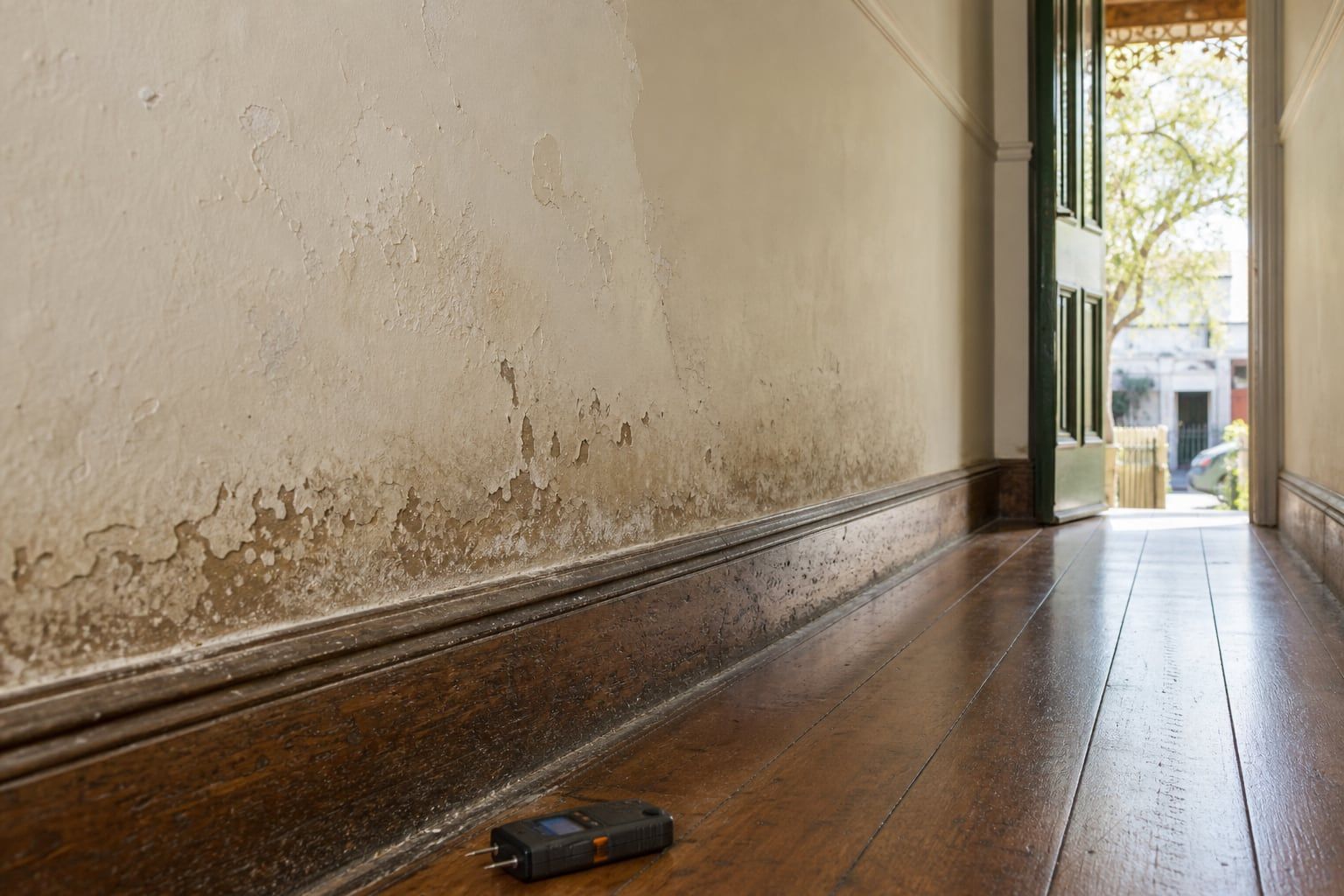
- Tide marks and salt along hallway and front-room walls of terraces
- Party walls drawing damp up from the ground and carrying it through the house
- Cement render on external brick that traps moisture inside the wall
- Front gardens and paths built up over the years above the damp course line
- Plasterboard over old brick, with mould growing unseen behind it
- Low, poorly vented subfloors under Federation semis and cottages
Many Petersham homes have also been converted or extended at the back, and those additions often block what little subfloor ventilation there was.
How we treat Petersham homes
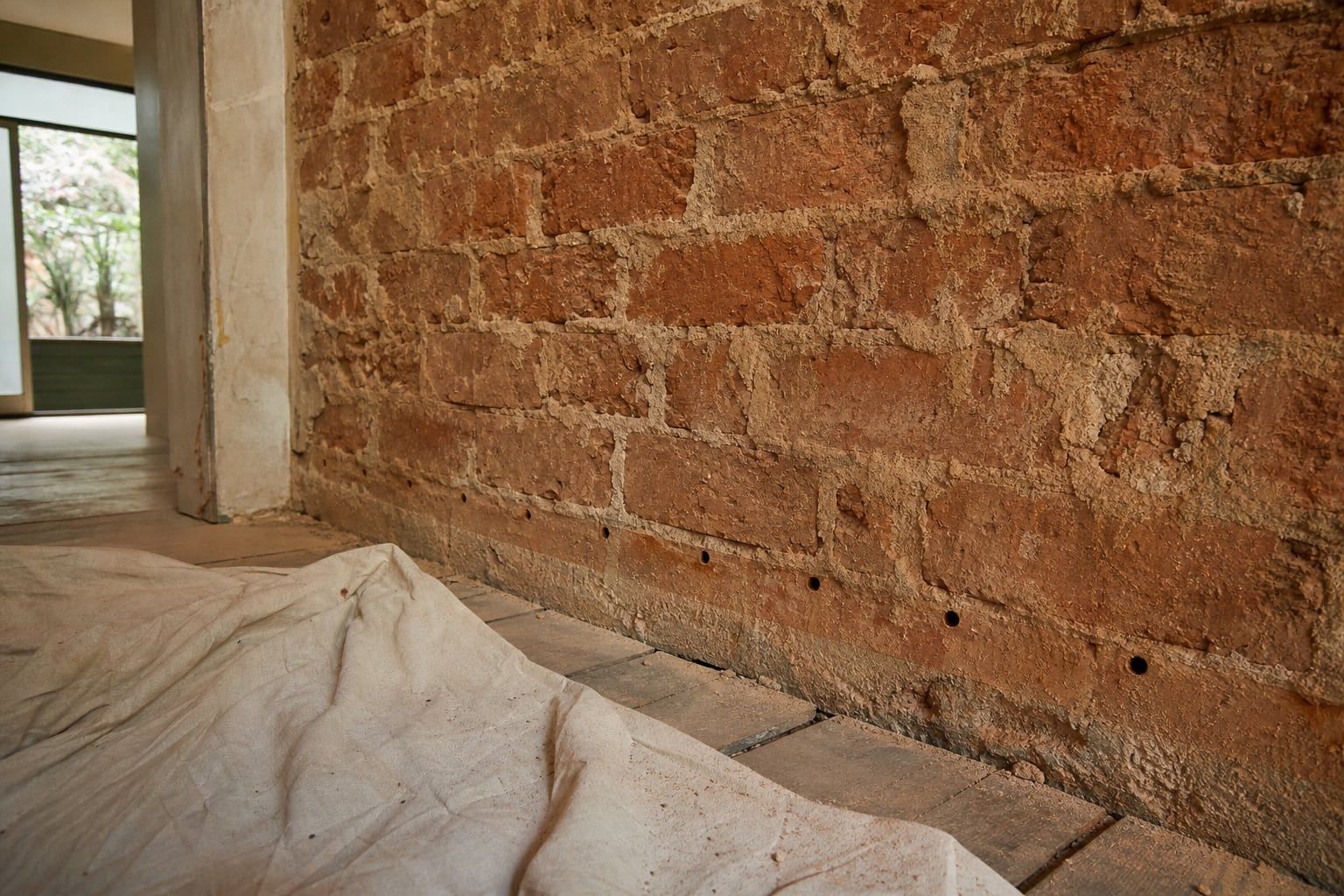
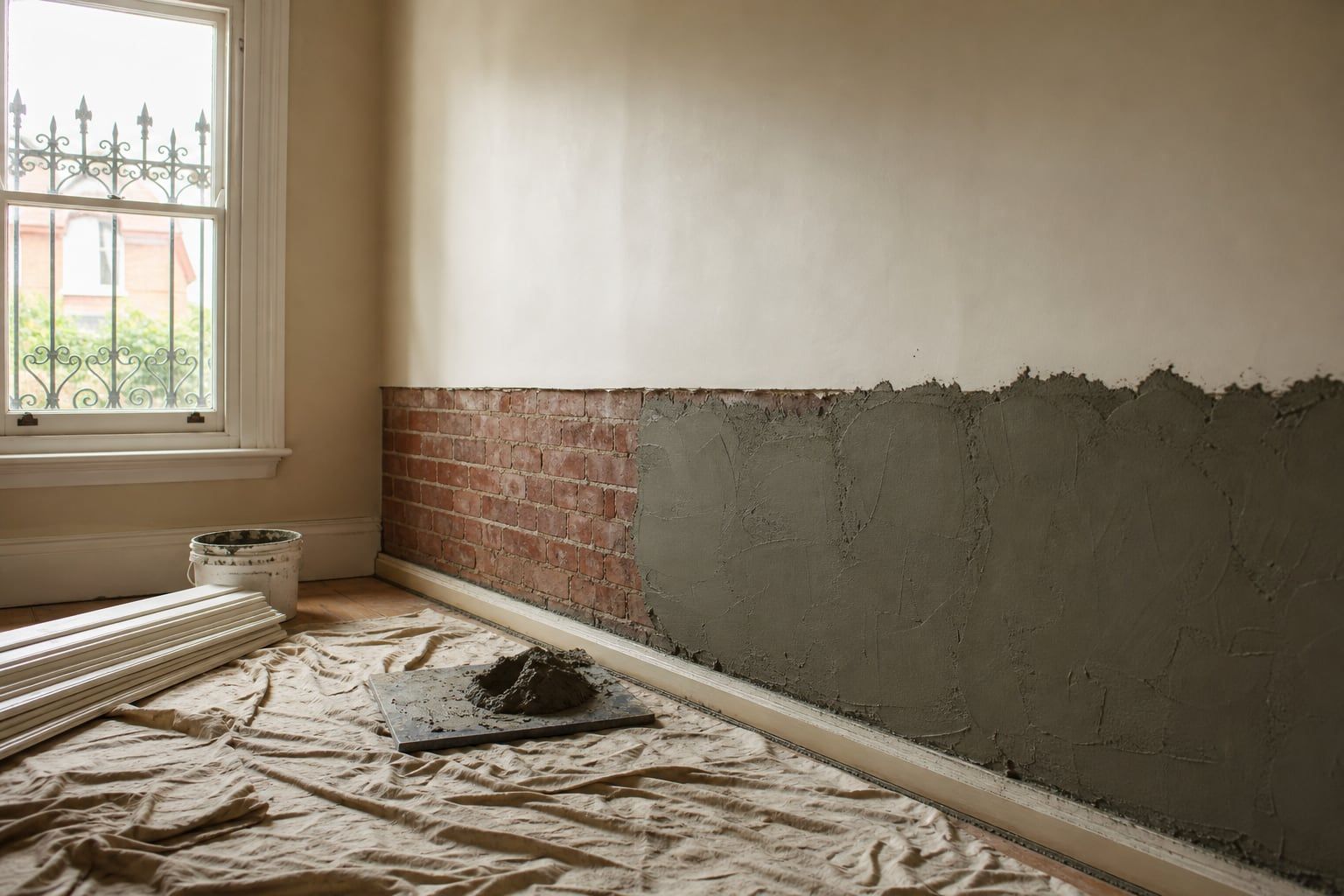
We start with readings at several heights on each wall and a look under the floor. Most solid brick walls here suit a chemical damp course, injected along a mortar joint just above floor and ground level. Once the barrier is in, the salt-laden plaster is cut back and replaced with a salt-resistant render that lets the wall keep drying without staining.
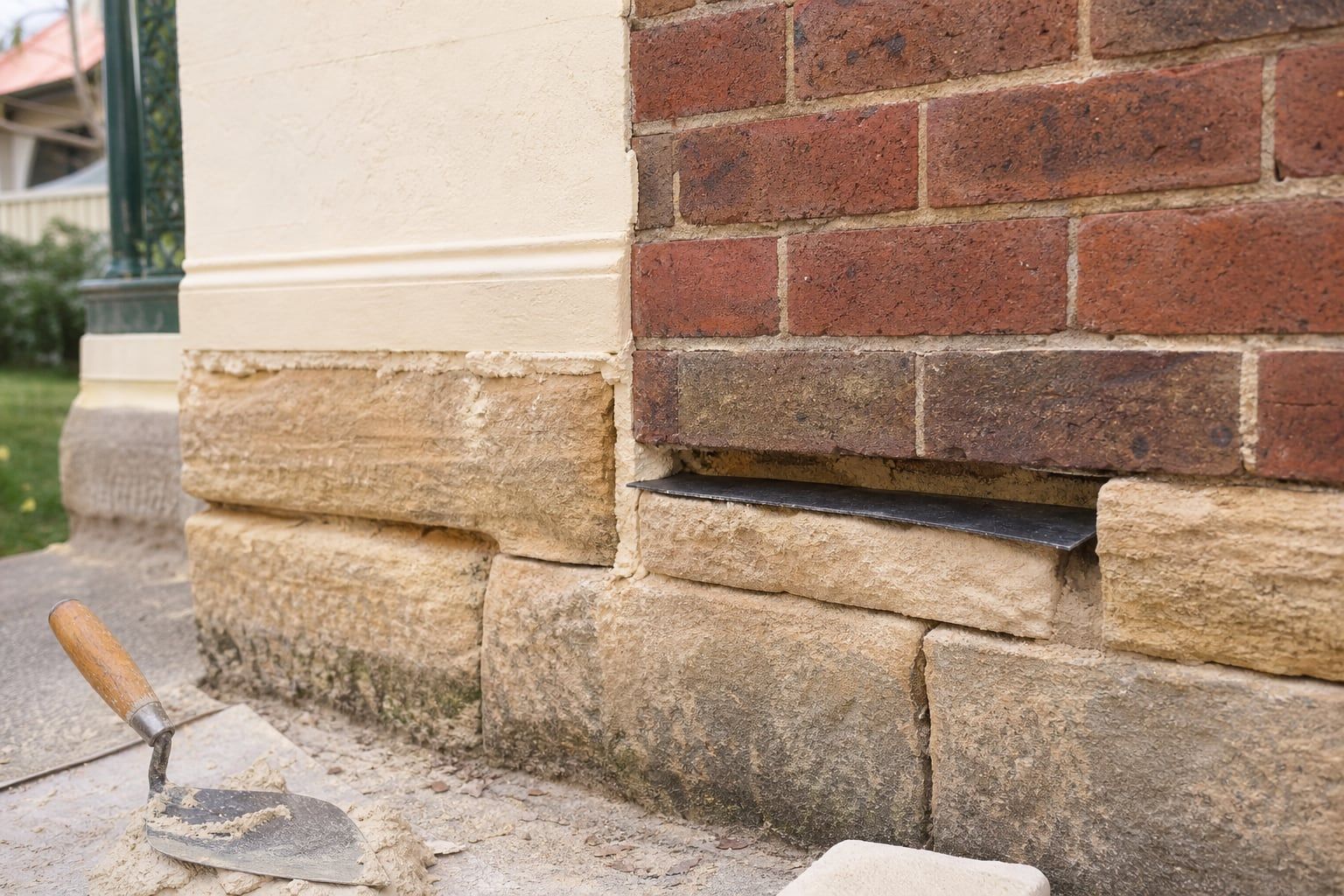
For walls with crumbling mortar or very wet bases, a physical damp course cut into the joint in short sections can be the better choice. We explain the options and give you a fixed price for the method that suits each wall.
Heritage and council
Large parts of Petersham fall within Inner West Council heritage conservation areas. Treating damp inside the house and repairing with matching materials normally doesn’t need approval, but changes to a street-facing wall or front fence might. We keep the original brick and use lime-compatible mortars and renders.
Subfloors in Petersham
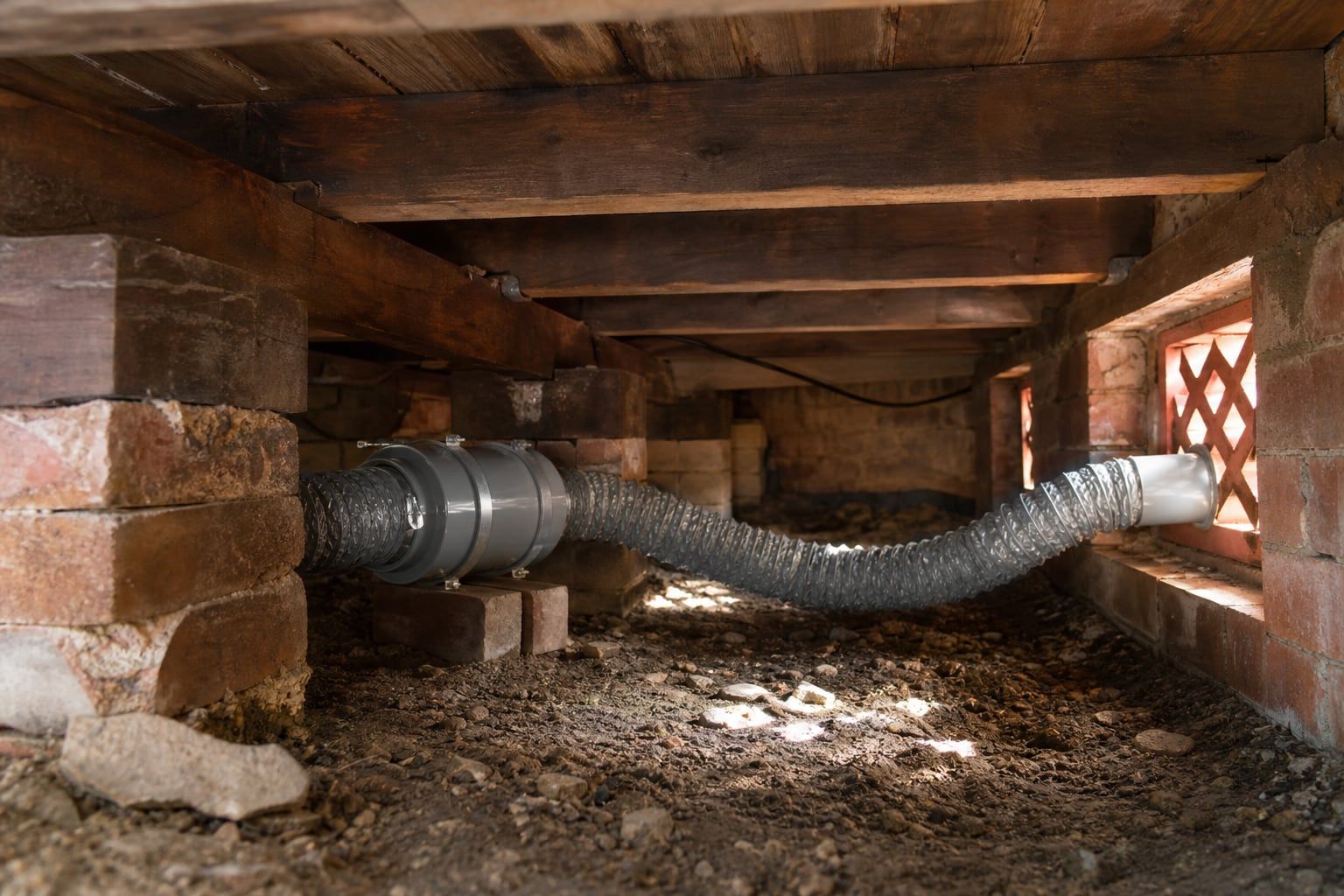
Federation semis and cottages in Petersham often have a reasonable subfloor height, but their vents have been painted over, blocked by raised paths, or covered by rear additions. Clearing and adding vents is sometimes enough. Where the subfloor is low or enclosed, a fan system moves the damp air out and helps the internal walls dry after treatment.
Before you book
If the paint keeps lifting along your skirtings, our guide to bubbling paint and plaster explains why repainting alone doesn’t work. We’ll look at your Petersham home for free and give you a fixed price in writing. We also cover nearby suburbs, including rising damp in Stanmore and Lewisham.
Updated
Rising damp services in Petersham
What we do for Petersham homes, chosen to suit how each house was built.
Why Petersham homeowners call us
15+ years on Inner West damp
Solid brick, sandstone footings and lime mortar are what we have worked on for more than 15 years, so the treatment is chosen for the wall, not the other way round.
Cause first
We measure moisture and check drainage, ground levels, leaks and ventilation before recommending a damp course, so you only pay for what fixes the problem.
Fixed-price quotes
You get a written, fixed-price quote after the inspection, with no obligation to go ahead.
How a Petersham job runs
- We inspect and measureWe confirm it's genuinely rising damp, not a leak, and measure how far it has climbed.
- Install the damp courseWe inject or insert a new damp-proof barrier along the affected walls.
- Repair the plasterWe hack off salt-damaged render and replaster with a salt-resistant system.
- Dry out and checkThe wall dries over the following weeks, and we check back that it's holding.
Rising damp guides for Petersham homeowners
- Tide marks on walls: what a rising damp tide mark meansWhy a brown or white line forms along the bottom of damp walls, how to tell rising damp from other causes, and what fixes it.
- Bubbling paint and blown plaster: is it rising damp?Why paint blisters and plaster crumbles near the floor of older homes, how to find the cause, and how to repair it so it stays fixed.
- Damp, musty smell in the house: finding the sourceWhere the musty smell in older homes comes from, the subfloor and wall problems behind it, and how to get rid of it for good.
- Mould low on walls and skirtings: condensation, rising damp or a leak?How to tell what is causing mould on your walls, why cleaning it off doesn't stop it, and how each cause is fixed.
- White salt deposits on walls: rising damp salt efflorescence explainedWhat the white crystals on damp walls are, why they keep coming back, and how salt-damaged walls are repaired.
Rising damp questions in Petersham
Something else on your mind? Call 02 9158 9921 and ask.
Is rising damp common in Petersham?
Yes. Petersham is one of the Inner West's older suburbs, with many Victorian terraces and Federation semis built of solid brick with early damp courses that have since failed. Low-lying streets and closed-in subfloors make it worse.
Do I need to replaster after a damp course?
Usually, yes. The plaster above the old tide mark is full of salt, and salt keeps drawing moisture from the air. Replacing it with a salt-resistant render is what stops the stains coming back.
Do heritage terraces need special treatment?
Yes. Many Inner West terraces are heritage-listed or in conservation areas, so the fix has to be effective without damaging original brick, render or detailing. We use methods matched to the building fabric.
Is it rising damp, or something else?
Not always. Leaking gutters, blocked drains or lateral moisture can mimic rising damp. We diagnose the real cause first, so you don't pay for treatment you don't need.
How much does rising damp treatment cost?
It depends on the length of wall affected and the method. We give a fixed, no-obligation quote after a free on-site inspection.
How long until the wall dries out?
The new damp course works immediately, but a wall that's been wet for years needs time to release that moisture, typically a few months depending on wall thickness.
Which councils do you work in?
We work across Inner West Council, the City of Canada Bay, Burwood, Strathfield, and the Inner West parts of the City of Sydney and Canterbury-Bankstown.